
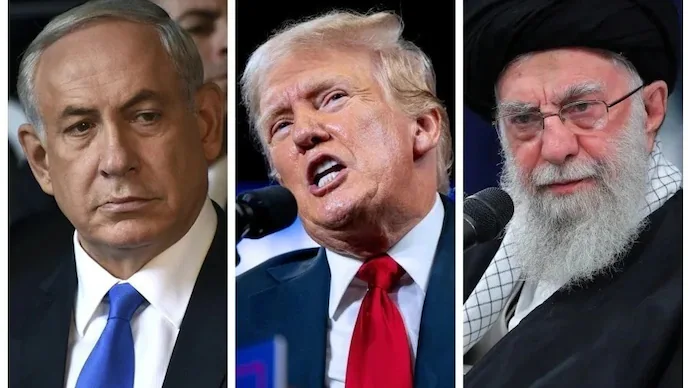
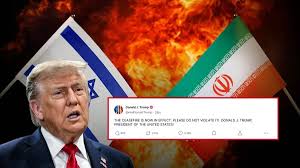
Trump Says Israel-Iran Ceasefire, In a dramatic turn of events that captured the world’s attention, a ceasefire between Israel and Iran appears to be in place after nearly two weeks of escalating conflict. The announcement came from none other than former U.S. President Donald Trump, who took to his Truth Social platform to declare, “Trump says Israel-Iran ceasefire is now in full effect.”
However, this declaration came amid confusing signals, conflicting reports, and continued violence that briefly overshadowed hopes for peace. As the dust settles from the violent exchanges, questions remain about the ceasefire’s durability and the events that led to this fragile calm.
Table of Contents
Trump Says Israel-Iran Ceasefire Has Been Reached
Early Tuesday morning, Donald Trump posted on his Truth Social account, announcing that both Israel and Iran had agreed to a “complete and total ceasefire.” This marked a major shift in tone for the conflict, which had seen four waves of Iranian missile strikes on Israeli targets over the past 12 days. “Trump says Israel-Iran ceasefire has been achieved,” his message declared, urging both sides to maintain the truce and avoid further provocation.
Trump’s message carried significant weight, especially given his previous involvement in Middle Eastern diplomacy during his presidency. Although no longer in office, his voice still resonates in international circles, and his statements often trigger global reactions.
Tehran’s Initial Denial and Sudden Reversal
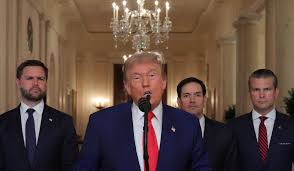
Shortly after Trump’s declaration, Iranian officials offered a surprising counter-narrative. Tehran initially denied that any formal ceasefire agreement had been reached. State representatives claimed that Iran had not committed to halting operations and accused Washington of misrepresenting the situation.
But within hours, the situation shifted once again. Iranian state-run media issued a public statement indicating that Iranian forces had indeed paused military actions following four intense waves of missile strikes on Israeli-occupied territories. This reversal was notable, as it suggested that diplomatic pressure — potentially involving backchannel talks — had influenced Tehran’s decision to temporarily stand down.
Despite the reversal, conflicting reports continued to emerge, suggesting that the ceasefire announcement was not uniformly observed on the ground.
Continued Violence Despite Trump’s Declaration
Even as Trump says Israel-Iran ceasefire is now in force, Israeli media reported that missile sirens rang out in Tel Aviv shortly after the announcement. Israeli authorities confirmed that four civilians had been killed and at least six others wounded in missile attacks believed to have been launched by Iranian proxies operating near the region.
Israel responded with limited defensive countermeasures, but refrained from launching a full-scale retaliation, indicating a cautious adherence to the ceasefire terms. The Israeli government later stated that it was committed to peace but prepared to respond if Iranian aggression resumed.
This precarious moment highlighted the tension between diplomatic statements and military realities. Although Trump says Israel-Iran ceasefire is holding, the events on the ground hinted at the fragility of the arrangement.
Background: The 12-Day Israel-Iran War
The latest round of violence between Iran and Israel erupted nearly two weeks ago following a series of clandestine operations, cyberattacks, and disputed border incidents. Iranian officials accused Israel of orchestrating attacks on Iranian nuclear and military sites, while Israel cited escalating threats from Iranian-backed groups operating in Lebanon and Syria.
These initial provocations quickly escalated into a broader conflict, with Iran launching multiple waves of missile attacks on Israeli targets. Israel, in turn, responded with targeted airstrikes, drone operations, and cyber offensives aimed at Iran’s military infrastructure.
The 12-day conflict claimed dozens of lives, displaced thousands, and drew condemnation from the international community. As civilian casualties mounted, calls for an immediate ceasefire intensified from the United Nations, the European Union, and countries in the Middle East.
It was amid this climate of global concern that Trump says Israel-Iran ceasefire has been enacted — a development welcomed by many, but still viewed with skepticism.
Trump’s Role and Diplomatic Implications
Although Donald Trump no longer holds office, his announcement carried international weight. When Trump says Israel-Iran ceasefire is effective, it is not merely a personal opinion but a signal of backchannel negotiations that may have involved regional stakeholders, allies, or intelligence operations.
Some analysts speculate that Trump’s long-standing relationships in the region — including ties with Israel’s leadership and outreach to Iran during his presidency — may have given him unique leverage to influence the situation.
Furthermore, Trump’s call for calm comes as the Middle East remains highly volatile, with broader regional powers watching closely. Saudi Arabia, the UAE, Russia, and China all have vested interests in ensuring that the Israel-Iran conflict does not spiral into a wider war.
Public Reactions to Trump’s Ceasefire Statement
Reactions to the announcement have been mixed. While some welcomed the development, others remained wary. Social media was flooded with hashtags like #TrumpCeasefire, #IranIsraelConflict, and #TruthSocial, with many users praising the former president for stepping in while others questioned the reliability of the ceasefire.
In Israel, some government officials cautiously embraced the announcement. “Any cessation of hostilities is a positive step,” said one Israeli defense official, “but we remain vigilant. We cannot lower our guard.”
In contrast, some Iranian clerics criticized Tehran’s decision to pause attacks, labeling it a “capitulation to Western pressure.” Iranian state media, however, defended the move, citing the need to protect civilians and avoid further escalation.
Uncertain Future: Will the Ceasefire Hold?
While Trump says Israel-Iran ceasefire is a done deal, experts caution that the path forward is uncertain. Ceasefires in the Middle East have historically been fragile, especially when driven by external pressures rather than mutual understanding.
Analysts point to several key factors that could determine whether this ceasefire holds:
- Enforcement Mechanisms: Without a neutral observer or formal agreement, enforcing the ceasefire may prove difficult. Both nations may interpret violations differently, leading to renewed conflict.
- Proxy Groups: Iranian-backed militias in Syria, Lebanon, and Iraq may continue operations independently, potentially jeopardizing the ceasefire even if Tehran and Tel Aviv remain restrained.
- Public Opinion: Hardliners on both sides could exert political pressure to resume hostilities, especially if either nation believes it has lost face or strategic advantage.
- US Influence: Trump’s involvement suggests continued American interest, but without official State Department backing, the ceasefire may lack long-term diplomatic support.
Global Reactions and International Pressure
World leaders responded quickly after Trump says Israel-Iran ceasefire is now in place. The European Union issued a statement urging both sides to adhere strictly to the truce and work towards a long-term resolution.
Russia and China, both of which have strategic relationships with Iran, welcomed the ceasefire but urged the U.S. not to interfere further in Middle Eastern affairs. Meanwhile, Arab League nations called for a broader peace process involving Palestinian statehood, regional disarmament, and humanitarian aid.
The United Nations offered to send a special envoy to oversee the implementation of the ceasefire terms and facilitate talks. Whether Iran and Israel accept such an offer remains to be seen.
Media Coverage and Political Narratives
News outlets across the globe covered the story extensively. Headlines such as “Trump says Israel-Iran ceasefire effective after deadly strikes” and “Ceasefire in Place as Iran Ends Missile Waves” dominated television and digital platforms.
Right-leaning media praised Trump’s bold declaration, crediting him for helping de-escalate the conflict. In contrast, some left-leaning outlets questioned the sustainability of a ceasefire declared without formal treaties or international monitors.
What’s clear is that “Trump says Israel-Iran ceasefire” is more than just a statement — it has become a defining moment in a conflict that could have spiraled into a larger regional war.
Conclusion: Hope and Hesitation
As it stands, the ceasefire is a welcome relief in a region that has seen too much violence, too many deaths, and too few lasting solutions. The world holds its breath as both sides weigh their next moves.
“Trump says Israel-Iran ceasefire must not be violated,” he warned in his concluding Truth Social message. Only time will tell whether that plea will be honored or forgotten amid the familiar chaos of Middle Eastern geopolitics.
One thing is certain: the phrase “Trump says Israel-Iran ceasefire” will echo through the halls of diplomacy and media for days, if not weeks, to come.
Pingback: Breaking: Iran-Israel News Shakes Global Travel – Flights Resume in Qatar as IndiGo & Qatar Airways Issue Urgent Advisories #1 - swiftheadlines.godsayhub.com