
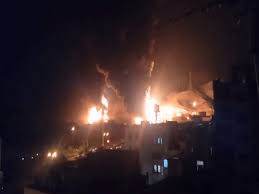
The Iran Israel war has escalated into one of the most intense military conflicts in the Middle East in recent decades. Over the past four days, a relentless exchange of missiles and drone attacks between the two adversaries has resulted in widespread destruction, hundreds of casualties, and global concern about the potential for a broader regional war. With Iran launching waves of missile strikes and Israel retaliating with precision airstrikes, the situation has reached a critical point with no ceasefire in sight.
Table of Contents (Iran Israel War)
Rising Tensions: The Spark Behind the Iran Israel War
The Iran Israel war was ignited after Israel expanded its military offensive against what it described as nuclear-linked sites in Tehran. In response, Iran retaliated with a barrage of drone and missile attacks targeting major Israeli cities, including Tel Aviv and Haifa. The conflict has since evolved into a full-scale confrontation with both countries hitting critical infrastructure and military targets.
Israeli Prime Minister Benjamin Netanyahu has stated that Israel destroyed Iran’s Natanz nuclear facility and killed several top Iranian officials, including the head of the Revolutionary Guards. In return, Iran launched guided ballistic missiles, such as the “Haj Qassem,” striking key Israeli cities and threatening broader escalation.
Monday Strikes: Residential Areas Targeted
Petah Tikva Under Fire
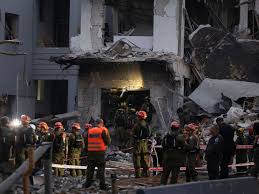
In the latest developments of the Iran Israel war, Iranian missiles struck a residential building in Petah Tikva, a central Israeli city near Tel Aviv. The attack caused extensive structural damage, blowing out windows, collapsing walls, and destroying multiple apartments. Rescue teams were seen searching the rubble for survivors. While the number of casualties remains unconfirmed, the destruction points to the growing human cost of the conflict.
Haifa Devastated
Around the same time, Iran targeted the northern port city of Haifa. According to local authorities, at least 30 people were injured, and a fire broke out at a power station near the port following multiple missile impacts. Residential and commercial properties in Haifa bore the brunt of the strike, raising alarm over the vulnerability of critical infrastructure during the Iran Israel war.
Tehran Burns: Israeli Strikes Hit Deep Inside Iran
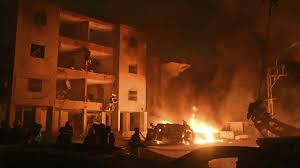
The Iran Israel war entered a new phase when Israel claimed to have hit Iranian defense ministry headquarters in Tehran. Explosions echoed across the Iranian capital as the Israeli Air Force targeted missile storage facilities, fuel depots, and locations reportedly linked to Iran’s nuclear weapons program.
The Iranian oil ministry confirmed that multiple fuel storage sites were destroyed in Tehran. Iran’s foreign ministry also accused Israel of deliberately striking a foreign ministry building, wounding several civilians. Videos released by Iranian officials showed blown-out windows and debris strewn across ministry offices.
Human Toll of the Iran Israel War
Iran has reported that 224 of its citizens were killed in Israeli strikes since Friday, with dozens more wounded. Israel, on the other hand, reported at least 10 deaths due to Iran’s counterattacks, with the number expected to rise as rescue operations continue.
Millions of Israelis have been forced into shelters, with the Israel Defense Forces (IDF) activating nationwide sirens to warn of incoming missile attacks. Cities like Tel Aviv, Jerusalem, and Haifa have witnessed consecutive nights of explosions and panic as air defense systems struggled to intercept every incoming threat.
Global Reactions to the Iran Israel War
The Iran Israel war has drawn significant international concern. World leaders attending the G7 summit expressed alarm at the possibility of the conflict engulfing the entire Middle East. European nations, including Germany, France, and the UK, have urged Iran to resume nuclear talks, despite the ongoing hostilities.
Russia, which maintains ties with both Iran and Israel, has offered to mediate between the two nations. Reports suggest that diplomatic backchannels involving Qatar and Oman are working toward a potential ceasefire, though Iran has categorically rejected such efforts unless Israeli strikes are halted.
United States Involvement
US President Donald Trump has taken a firm stance in support of Israel. He declared that the United States will stand by Israel in its right to defend itself, while also denying direct involvement in the Israeli offensive on Iran.
Interestingly, reports emerged suggesting that Israel had considered targeting Iran’s Supreme Leader Ayatollah Ali Khamenei. Trump reportedly opposed this move, fearing a dramatic escalation. Meanwhile, Israeli PM Netanyahu claimed Iran had plotted to assassinate Trump, calling him “enemy number one” to Tehran’s nuclear ambitions.
Houthis and Hezbollah Join In
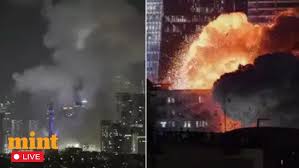
Yemen’s Houthi rebels, who are backed by Iran, claimed to have launched a joint missile strike on Israel. Although unverified by Israeli officials, the claim suggests that the Iran Israel war could draw in Iran-aligned proxy forces from across the region, including Hezbollah in Lebanon and militias in Iraq and Syria.
The US Embassy in Baghdad issued a travel advisory to American citizens in Iraq, citing the increased risk of attacks on US assets and personnel by Iran-backed groups.
Airspace and Market Reactions
As the conflict escalates, several nations have taken precautionary measures. Israel has kept its airspace shut for three consecutive days. In contrast, Jordan has lifted airspace restrictions, signaling improved local security conditions.
The Tel Aviv stock exchange saw a sharp dip after markets reopened amid the Iran Israel war, indicating a lack of investor confidence and fear of long-term instability.
Nuclear Concerns and Evacuation Warnings
In one of the most alarming developments, the Israeli military warned Iranians living near nuclear reactors to evacuate immediately. The warning comes amid growing fears that the Iran Israel war could escalate into attacks on nuclear facilities, raising the specter of a nuclear catastrophe in the region.
While Iran has dismissed the Israeli threat as psychological warfare, it has also activated its own air defense systems in the northwest region of the country, indicating preparation for further Israeli attacks.
No Ceasefire in Sight
Despite the high casualties and widespread destruction, Iran has ruled out any ceasefire negotiations. A senior Iranian official told Reuters that Tehran would not talk while it remains under attack, rejecting efforts by Qatar and Oman to mediate.
Iran further stated that it would halt its response only if Israel stops its offensive. However, with both sides continuing to hit each other’s strategic targets, the likelihood of a ceasefire remains slim.
Key Officials Killed
Iran confirmed that the Chief of the Revolutionary Guards and two senior generals were killed in Israeli airstrikes. These high-profile deaths mark a major loss for Iran’s military leadership and could provoke an even stronger retaliatory response.
Meanwhile, Israel claims to have eliminated Iran’s intelligence chief and other top figures linked to the country’s nuclear and defense programs.
Netanyahu’s Strategy and Future Outlook
Netanyahu has made it clear that the current Israeli operations are only the beginning. “We got their intelligence chief. We destroyed their nuclear site. This operation will continue until Iran’s military capabilities are permanently crippled,” he said in an interview with Fox News.
Israel has also extended its public safety guidelines until June 17, closing schools and public gatherings, signaling that the military campaign is far from over.
Humanitarian Crisis Unfolding
With over 300 deaths reported on both sides and thousands displaced, the Iran Israel war is quickly spiraling into a humanitarian disaster. Aid organizations have called for urgent humanitarian corridors to help civilians affected in cities like Tel Aviv, Haifa, and Tehran.
Rescue teams in both countries are working around the clock, searching through rubble for survivors, while hospitals are overwhelmed with the influx of wounded civilians and soldiers.
Summary and Conclusion
The Iran Israel war has become the most dangerous flashpoint in the Middle East today. What began as a military exchange has now escalated into a full-blown conflict involving missile strikes, air raids, and assassinations. The loss of life and damage to infrastructure is devastating, and both countries seem unwilling to back down.
Without a diplomatic breakthrough, the war threatens to spiral further, possibly dragging the entire region into chaos. Global powers must act urgently to mediate and bring both sides to the table before the Iran Israel war evolves into something far deadlier—a regional war with nuclear implications.