
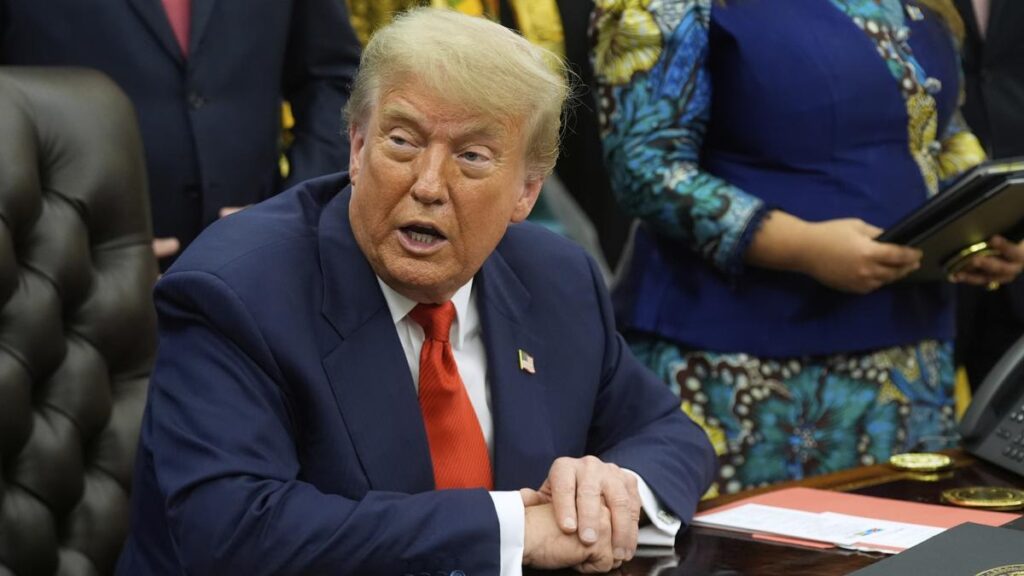
Tehran | June 28, 2025 — The political tension between Washington and Tehran flared again on Saturday as Iran hits back at Trump following the former U.S. President’s contentious remarks claiming he saved Supreme Leader Ayatollah Ali Khamenei from assassination. Iranian officials swiftly denounced Donald Trump’s comments, calling them “disrespectful” and “unacceptable.”
Iranian Foreign Minister Abbas Araghchi led the diplomatic response, issuing a fiery condemnation of Trump’s statements. Speaking through his official account on the social platform X, Araghchi said, “If President Trump is genuine about wanting a deal, he should put aside the disrespectful and unacceptable tone towards Iran’s Supreme Leader, Grand Ayatollah Khamenei.”
Table of Contents (Iran Hits Back at Trump)
Trump’s Provocative Statement
The latest war of words stems from a post made by Trump on his Truth Social platform, in which he claimed that he had personally intervened to prevent Israel and the U.S. military from targeting Ayatollah Khamenei during a previous phase of heightened tensions. “I knew EXACTLY where he was sheltered, and would not let Israel, or the U.S. Armed Forces, by far the Greatest and Most Powerful in the World, terminate his life,” Trump wrote.
“I SAVED HIM FROM A VERY UGLY AND IGNOMINIOUS DEATH,” the former President added. “He does not have to say, ‘THANK YOU, PRESIDENT TRUMP!’”
This inflammatory post has triggered outrage in Iran, especially at a time when tensions in the region remain high following the 12-day Israel-Iran conflict that erupted earlier in June.
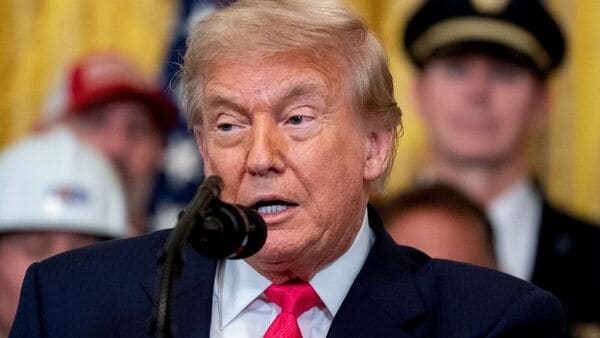
Iran Hits Back at Trump: A Strong Diplomatic Response
Iran hits back at Trump not only through its Foreign Minister but also via other senior officials who interpreted Trump’s claims as psychological warfare aimed at undermining the legitimacy of Iran’s leadership.
Foreign Minister Araghchi went further in his statement, saying, “The Great and Powerful Iranian People, who showed the world that the Israeli regime had NO CHOICE but to RUN to ‘Daddy’ to avoid being flattened by our Missiles, do not take kindly to threats and insults.”
This reference comes in the wake of coordinated attacks by both the United States and Israel on Iranian nuclear infrastructure. While the U.S. launched strikes on three major Iranian nuclear sites, questions remain regarding their effectiveness and strategic outcomes.
Ceasefire and Claims of Victory
The war of words between Trump and Iranian leaders follows a ceasefire announced after nearly two weeks of hostilities between Iran and Israel. During the conflict, Iran launched waves of missile and drone attacks in retaliation for Israeli airstrikes on strategic Iranian targets.
According to Iran’s narrative, its military success forced Israel to seek U.S. support, hence the claim that the Israeli regime had to “run to Daddy.” This statement has gone viral on Iranian social media, symbolizing national pride and a perceived upper hand in the recent escalation.
As Iran hits back at Trump, it is also shaping its internal and external messaging to reinforce the idea of resilience and strength in the face of Western aggression.
Nuclear Sites Under Fire
On June 13, Israel initiated a large-scale aerial campaign targeting Iran’s nuclear infrastructure. Washington joined the offensive soon after, marking a rare instance of joint U.S.-Israeli military engagement against Iran in such a public fashion.
However, experts say the strikes yielded limited success. “Iran’s underground facilities and decoy systems proved surprisingly resilient,” said Dr. Farid Momeni, a defense analyst based in Istanbul. “The actual impact on Iran’s enrichment capabilities appears to have been minimal.”
The limited effectiveness of the military campaign has emboldened Tehran, which now positions itself as the victor of the 12-day confrontation. In this context, Iran hits back at Trump with renewed vigor, portraying his comments as a desperate attempt to reassert dominance in a rapidly changing geopolitical environment.
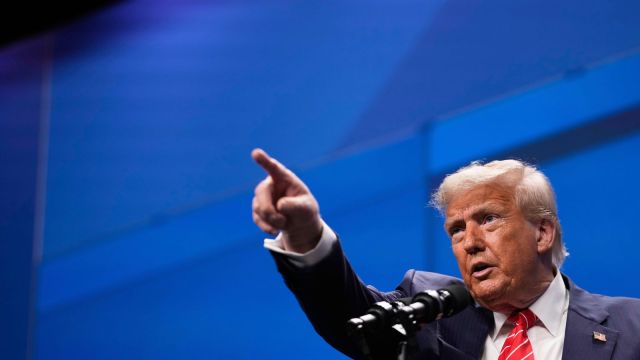
Trump’s Carrot-and-Stick Approach
Despite his aggressive tone, Trump also hinted at potential diplomatic overtures. In his social media post, the former President claimed he had been working to lift sanctions on Iran before being rebuffed by what he described as “anger, hatred, and disgust” from Tehran.
“I had started working on possible sanctions relief, one of their main demands,” Trump stated. “But no, instead I get hit with hostility. I immediately dropped all work on sanction relief.”
Trump concluded his post by urging Iran to return to the negotiating table, despite earlier suggesting that negotiations were already imminent.
This contradiction did not go unnoticed. Iranian officials denied that any nuclear talks were scheduled to resume, directly contradicting Trump’s claims. As Iran hits back at Trump, it also challenges the credibility of his statements, painting him as erratic and unreliable.
Strategic Implications: Iran’s Messaging to the World
The episode is not just a personal spat between Trump and Iranian officials—it also has broader implications for regional diplomacy and international relations.
As Iran hits back at Trump, it sends a clear message to its allies and adversaries: Iran will not tolerate personal insults directed at its Supreme Leader, and it will respond with both rhetoric and action. Tehran’s emphasis on national pride, religious leadership, and military strength plays well with its domestic audience and helps solidify the regime’s internal control.
Moreover, Iranian state media has been actively circulating Trump’s quotes as evidence of U.S. duplicity. “One day they threaten annihilation, the next they talk about sanctions relief. The Iranian people are not fools,” said one headline on state TV.
Public Response in Iran
The public in Iran has reacted strongly to the episode. Hashtags like #TrumpLies and #IranPower have trended on X in Persian-speaking regions. Many users praised the Foreign Minister’s stance and echoed his sentiment that Iran should not return to the negotiation table under threat or mockery.
As Iran hits back at Trump, ordinary Iranians are also weighing in on the balance between diplomacy and dignity. “Trump thinks he can bully us into submission,” said a university student in Tehran. “But we proved during the war that we don’t bend. We retaliate.”
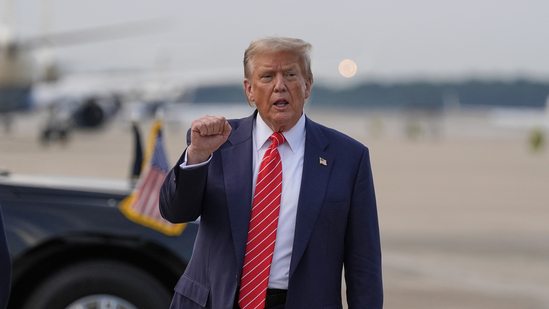
Global Reactions
Other nations have also been watching closely as Iran hits back at Trump. Analysts in Europe warn that such rhetoric could further destabilize already fragile talks on nuclear non-proliferation.
“The inflammatory language used by both sides is counterproductive,” said Louise Bertrand, a senior analyst at the European Council on Foreign Relations. “Diplomatic efforts must be grounded in mutual respect.”
Russia and China, both allies of Iran, have remained largely silent but are expected to use the situation to position themselves as more stable diplomatic partners in the region.
Trump’s Legacy in Question
This latest clash is likely to influence Trump’s foreign policy legacy, especially as the U.S. heads into another election cycle. While he remains a dominant figure in American politics, his approach to Iran has consistently drawn criticism for its unpredictability and aggressive posture.
As Iran hits back at Trump, American media and political figures are divided. Some conservative commentators defend Trump’s approach as assertive and bold. Others warn that such personal attacks weaken America’s moral authority and diplomatic leverage.
What Lies Ahead?
With ceasefire lines holding for now and both nations regrouping, the road ahead remains uncertain. While Trump’s remarks may not carry official government weight since he is not in office, they do represent the views of a significant political faction in the United States.
Iran, for its part, is unlikely to return to negotiations without concrete signs of goodwill. The Foreign Minister made it clear that “talks under threat are no talks at all.”
As Iran hits back at Trump, it underscores the complexity of future diplomacy. The remarks have hardened positions on both sides, and for now, the prospect of renewed dialogue appears remote.
Conclusion
In a world already burdened by geopolitical friction, the recent developments mark another chapter in the long-standing tension between Tehran and Washington. As Iran hits back at Trump, the episode reflects a deeper clash of ideologies, pride, and political legacy.
While Trump’s comments were likely aimed at demonstrating past strength, they have instead reignited nationalist sentiment in Iran. Tehran’s response signals that any future negotiation will require far more than bravado—it will demand respect, restraint, and realism from both sides.
As global powers look on, one thing is clear: Iran hits back at Trump is not just a headline—it’s a defining moment in the post-conflict narrative of a region constantly teetering between war and diplomacy.