
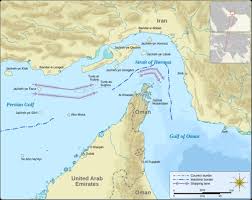
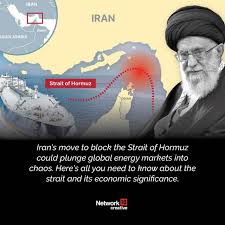
Iran Blocks Hormuz, In a move that could significantly impact global energy dynamics, Iran’s Parliament has approved a decision to potentially block the Strait of Hormuz, subject to final clearance from the Supreme National Security Council. This decision follows heightened tensions in the region, especially after U.S. airstrikes hit three key Iranian military sites. The development marks a dangerous escalation, and the repercussions could be felt globally — especially in countries like India that heavily depend on oil supplies passing through this strategic waterway.
So far, Iran has never acted on threats to block the Strait, even during intense conflicts like the Iran-Iraq War. However, the latest geopolitical developments suggest that this time might be different. As the world holds its breath, it is crucial to understand the geographic, economic, and political significance of this waterway — and why the possibility that Iran blocks Hormuz is a global concern.
Let’s break it down into four essential points.
Table of Contents
1. What is the Strait of Hormuz?
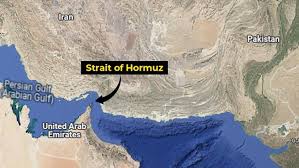
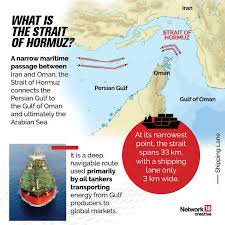
The Strait of Hormuz is a narrow passage of water that links the Persian Gulf with the Gulf of Oman and, eventually, the Arabian Sea. This strategic waterway serves as the only sea passage from the Persian Gulf to the open ocean, making it a critical chokepoint for international energy trade. Countries like Iran, Saudi Arabia, the United Arab Emirates, and Iraq all rely on this route to export their crude oil and liquefied natural gas (LNG).
Geographically, the Strait is relatively narrow—only about 33 kilometers wide at its tightest point. Even narrower are the shipping lanes used for two-way marine traffic, each only 3 kilometers wide. This makes the passage highly vulnerable to disruptions, both physical (such as naval blockades or mine-laying) and cyber (such as attacks on navigation systems).
The Strait lies partially within Iran’s territorial waters and also borders Oman, giving Tehran substantial influence over its security and operations. This is precisely what makes the scenario where Iran blocks Hormuz such a credible and potent threat. Because there are no viable alternative sea routes, control over this chokepoint essentially offers leverage over a significant portion of the world’s oil supply.
2. Why Is the Strait of Hormuz So Crucial?
The importance of the Strait of Hormuz boils down to one word: oil. According to the U.S. Energy Information Administration (EIA), around 20 million barrels of oil per day passed through the Strait in 2024. That figure represents more than one-quarter of the world’s total seaborne oil trade and nearly 20% of global oil and petroleum consumption. Additionally, a significant portion of the world’s LNG trade—especially from Qatar—also travels through this passage.
If Iran blocks Hormuz, the disruption will not just be regional but global. The blockade would likely result in:
- Immediate spikes in global oil prices
- Disruption of LNG supply chains
- Increased shipping and insurance costs
- Wider inflation across global markets
The world economy is so tightly linked to energy markets that even the threat of a blockade often sends oil prices soaring. A confirmed action would create immediate panic in energy-dependent economies.
Alternatives to the Strait exist but are limited in scope and capacity. For instance:
- Saudi Arabia operates the East-West pipeline (Abqaiq to Yanbu), which can transport up to 5 million barrels per day to the Red Sea.
- The UAE uses a pipeline to the Fujairah port on the Gulf of Oman, moving up to 1.8 million barrels daily.
However, these figures pale in comparison to the 20 million barrels that typically pass through Hormuz, making them insufficient in the event that Iran blocks Hormuz completely.
3. Will Iran Really Block the Strait of Hormuz?
Historically, Iran has never gone through with its threats to block the Strait, even during major conflicts like the 1980s Iran-Iraq war. While both countries targeted oil tankers passing through the region back then, full-scale blockage never occurred. The reasons for this restraint are both strategic and economic:
- Self-Interest: Iran itself exports oil through the Strait. Any disruption would harm its own economy.
- Alliances: China, Iran’s major oil customer, would be negatively affected, reducing Beijing’s support.
- Regional Relations: Tehran has been working to improve ties with Gulf nations like Saudi Arabia and the UAE. Blocking the Strait could reverse this progress.
- Military Risk: A complete blockade would likely provoke a direct and powerful military response from the United States, which maintains its Fifth Fleet in Bahrain.
However, things have changed. With the U.S. already engaging militarily by striking Iranian military assets, Iran may no longer feel the deterrent of potential American retaliation. This shift in perception increases the chances that Iran blocks Hormuz — at least partially, or for symbolic purposes.
Tehran has many ways to disrupt the Strait:
- Naval Mines: Easy to deploy, hard to detect and neutralize.
- Missile Strikes: Iran has an arsenal of short and medium-range missiles that can target ships.
- Ship Seizures: Iran has previously detained foreign tankers.
- Cyber Attacks: Targeting navigation systems of oil tankers and commercial ships.
Each of these tactics could cause significant disruption, even without a full-scale blockade. And that’s precisely why the world is watching this closely.
4. How Will India Be Affected If Iran Blocks Hormuz?
India, like many Asian economies, is particularly vulnerable to any disruption in the Strait of Hormuz. In 2024, about 84% of the crude oil and condensate passing through Hormuz was destined for Asian markets. Of this, India, China, Japan, and South Korea accounted for nearly 69% of the total flow.
India imports a substantial portion of its oil needs via this route. While New Delhi has diversified its oil sources—buying from Russia, Africa, Latin America, and even the U.S.—the bulk still comes from the Middle East. Thus, if Iran blocks Hormuz, the impact on India will be swift and severe in several ways:
a. Fuel Prices Will Rise
The first and most visible impact will be at the fuel pumps. Crude oil prices will spike, and this will reflect in higher petrol and diesel rates. This, in turn, will affect transportation, agriculture, and retail prices.
b. Inflation Could Spiral
India is already battling inflation across food and essential commodities. Higher fuel costs will worsen the situation, pushing inflation beyond manageable levels.
c. Pressure on the Rupee
Increased import bills due to higher oil prices could put pressure on India’s trade deficit and weaken the rupee further. This could make other imports expensive and hurt foreign investment sentiment.
d. Geopolitical Complications
India has to walk a tightrope between its old strategic partnership with Iran and its growing relationship with the U.S. and Gulf nations. A situation where Iran blocks Hormuz would force India to make hard diplomatic choices, potentially affecting defense and trade relations with other global players.
Furthermore, if China’s oil supplies from Iran are disrupted, it may aggressively seek alternative sources—possibly outbidding India in other markets. This will complicate the pricing dynamics even further and add to New Delhi’s energy procurement challenges.
Final Thoughts: The Global Stakes If Iran Blocks Hormuz
The possibility that Iran blocks Hormuz is no longer a distant or idle threat. With Iran’s Parliament approving the move and the country’s foreign minister acknowledging that “all options are on the table,” the global community must brace for potential energy shocks.
For Iran, the move would be a high-stakes gamble — one that could unify global opposition against it, especially from major powers like the U.S., China, and the EU. However, if Tehran feels it has little left to lose, it might just pull the trigger.
For the rest of the world — especially oil-dependent economies like India — this could mark the beginning of a prolonged energy and inflation crisis. Policymakers must now consider contingency plans, including emergency reserves, alternative supply chains, and diplomatic efforts to de-escalate tensions.
In the coming days, all eyes will remain fixed on the Strait of Hormuz. If Iran blocks Hormuz, the ripple effects will not just be felt in Tehran and Washington, but in homes, petrol pumps, and markets across the world.
Pingback: Trump Says Israel-Iran Ceasefire Brings Hope After 12 Days of Deadly Conflict - swiftheadlines.godsayhub.com