
India US Trade Deal News has taken center stage once again following remarks by former U.S. President Donald Trump, who recently hinted at a “very big” upcoming trade agreement with India. This comes shortly after the U.S. signed a landmark deal with China, marking a significant shift in Washington’s global trade strategy. While Trump stopped short of providing concrete details, his statement has reignited interest and speculation in diplomatic and economic circles worldwide.
Table of Contents
A Critical Juncture: India and the U.S. Eyeing Trade Breakthrough
The fresh wave of India US Trade Deal News comes amid high-level negotiations between New Delhi and Washington. Both nations are racing against the clock to finalize a trade agreement before July 9, 2025. That date marks the end of a 90-day tariff suspension window, originally granted by the U.S. after it imposed 26% reciprocal tariffs on Indian goods in early April.
The stakes are high for both economies. For India, avoiding renewed tariffs means safeguarding key exports and maintaining access to one of its largest markets. For the U.S., a deal with India could open a rapidly growing market of over 1.4 billion people and strengthen its strategic economic presence in the Indo-Pacific region.
Trump’s Bold Statement Sparks Global Attention
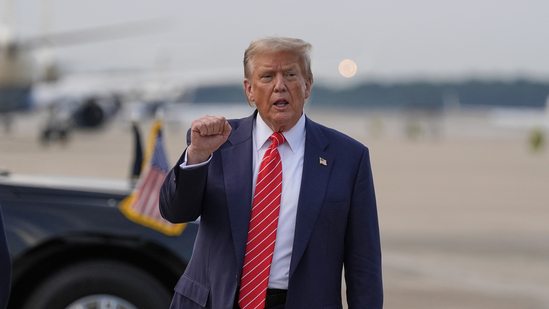
Speaking at a political event titled Big Beautiful Bill in Washington, D.C., Trump proudly highlighted the recent success of the China trade agreement and hinted at India being next in line. “Everybody wants to make a deal and be part of it,” Trump declared. “We just signed with China yesterday. We’re having some great deals. We have one coming up—maybe with India. Very big one. Where we’re going to open up India.”
This announcement sent waves through the global business community and triggered intense media coverage under the India US Trade Deal News category. While Trump did not go into specifics about the China deal or the potential scope of the India agreement, his tone was optimistic and forward-looking.
What’s at Stake in the India-US Trade Negotiations?
The U.S. and India have long-standing trade relations, but the path hasn’t been without friction. The India US Trade Deal News headlines over the past few years have documented numerous points of contention—from data localization and digital trade to market access for American agriculture and pharmaceuticals.
Here are some key areas under negotiation:
- Tariffs and Market Access:
The U.S. wants India to lower tariffs on American products such as medical devices, dairy, and electronics. India, in turn, seeks removal of tariffs on steel and aluminum exports and restoration of Generalized System of Preferences (GSP) status. - Agriculture and Dairy:
U.S. exporters are seeking broader access to India’s agricultural market, including dairy products. However, India has strict religious and safety concerns that complicate the issue. - E-Commerce and Data Policies:
India’s data localization rules have drawn criticism from American tech giants. The U.S. is urging for more open digital trade policies, which remains a complex area of negotiation. - Intellectual Property Rights:
The U.S. seeks stronger protections for patents and copyrights, while India aims to maintain affordable access to generic medicines. - Defense and Energy Cooperation:
While not strictly part of the trade deal, both nations are expanding collaboration in defense manufacturing and energy trade, which could bolster the broader economic framework.
Why the Timing Matters (India US Trade Deal News)
The India US Trade Deal News updates are particularly important right now due to the upcoming July 9 deadline, which marks the expiration of the tariff suspension. If no deal is signed by then, the U.S. is expected to reimpose the 26% reciprocal tariffs announced in April.
The original tariffs were imposed as a counter to India’s own trade barriers, which the U.S. had deemed restrictive. However, in an effort to maintain diplomatic goodwill, Washington granted a temporary 90-day pause for both countries to resolve the differences.
Now, with just days remaining, all eyes are on the negotiators in New Delhi and Washington.
The China Factor: How It Influences India-US Talks
Trump’s emphasis on the newly signed trade deal with China adds a significant twist to the India US Trade Deal News narrative. The U.S.-China agreement reportedly includes concessions on market access and commitments to intellectual property protections—two areas the U.S. also wants to address with India.
Analysts believe that success with China may embolden the U.S. to push harder for similar concessions from India. It also sets a precedent, making it more urgent for India to negotiate a favorable outcome lest it be seen as less cooperative on the global trade front.
India, however, is likely to tread cautiously. Unlike China, India has a much smaller trade surplus with the U.S., and its domestic policies around agriculture, small businesses, and data sovereignty are politically sensitive.
Economic Implications for India
As India US Trade Deal News continues to dominate headlines, economists are weighing in on the potential consequences of a successful or failed negotiation. A finalized trade agreement could bring:
- Increased U.S. investment in India, especially in sectors like defense, electronics, pharmaceuticals, and clean energy.
- Boost to exports, as reduced tariffs would make Indian products more competitive in American markets.
- Technology transfer, particularly in critical areas like semiconductor production and AI.
- Greater geopolitical alignment, reinforcing the Indo-Pacific strategy involving India as a strategic partner.
Conversely, failure to strike a deal by July 9 would result in renewed tariffs, denting India’s export revenues and potentially souring relations with a key ally during a volatile global economic period.
Political and Strategic Calculations
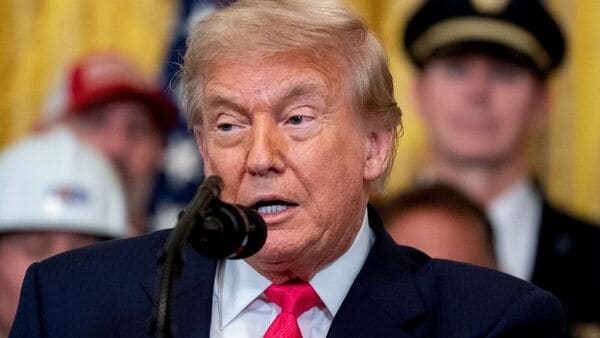
The India US Trade Deal News also carries significant political weight. In the U.S., Trump’s remarks are viewed as part of his broader campaign narrative that positions him as a dealmaker with the ability to rebalance global trade. Announcing a new agreement with India would serve as a powerful message to voters.
In India, Prime Minister Narendra Modi’s administration is equally motivated to showcase global partnerships. A successful trade deal with the U.S. would strengthen his pro-business image, attract foreign investment, and affirm India’s standing as a global economic player.
Business Community Responds
As the India US Trade Deal News circulates, reactions from the business world are pouring in. Industry leaders from both nations have voiced support for the trade negotiations, emphasizing the mutual benefits of an open and transparent trade framework.
The U.S.-India Business Council (USIBC) released a statement urging both governments to “move swiftly and boldly” toward a comprehensive agreement. Indian industry bodies such as CII (Confederation of Indian Industry) and FICCI echoed the sentiment, calling for greater clarity and lower trade barriers.
Challenges That Lie Ahead
Despite the optimism, the path to a successful agreement is not without hurdles. Key challenges include:
- Balancing domestic protectionism with international openness.
- Bridging significant policy differences, especially around digital trade and agriculture.
- Managing political optics, as leaders on both sides must satisfy domestic constituencies.
- Avoiding a perception of imbalance, where one side benefits disproportionately from the deal.
These challenges have historically slowed down previous negotiations. However, the current momentum fueled by Trump’s remarks could serve as a catalyst.
What’s Next?
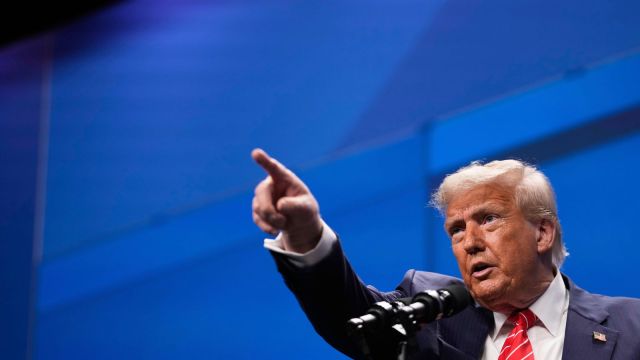
In the coming days, expect intense back-channel diplomacy, closed-door negotiations, and possibly public briefings from both governments. As per India US Trade Deal News, trade officials from both countries have been in near-daily contact, attempting to draft mutually agreeable terms.
If successful, the deal would be the first major trade agreement between the two nations in years and could serve as a foundation for future economic collaboration. If not, both countries risk economic disruptions and diplomatic strain.
Conclusion (India US Trade Deal News)
The latest India US Trade Deal News suggests that a transformative agreement may be closer than ever, though nothing is guaranteed. With July 9 fast approaching, the world is watching two of the largest democracies navigate one of the most important trade negotiations of the decade.
Whether the deal is signed or not, the trajectory of India US trade relations will have lasting implications—not just economically, but politically and strategically as well.
Stay tuned as we continue to bring you the most comprehensive updates on the India US Trade Deal News, a developing story that could reshape the future of global commerce.
Pingback: Iran Hits Back at Trump Over Controversial Remarks on Supreme Leader Khamenei 1 - swiftheadlines.godsayhub.com