
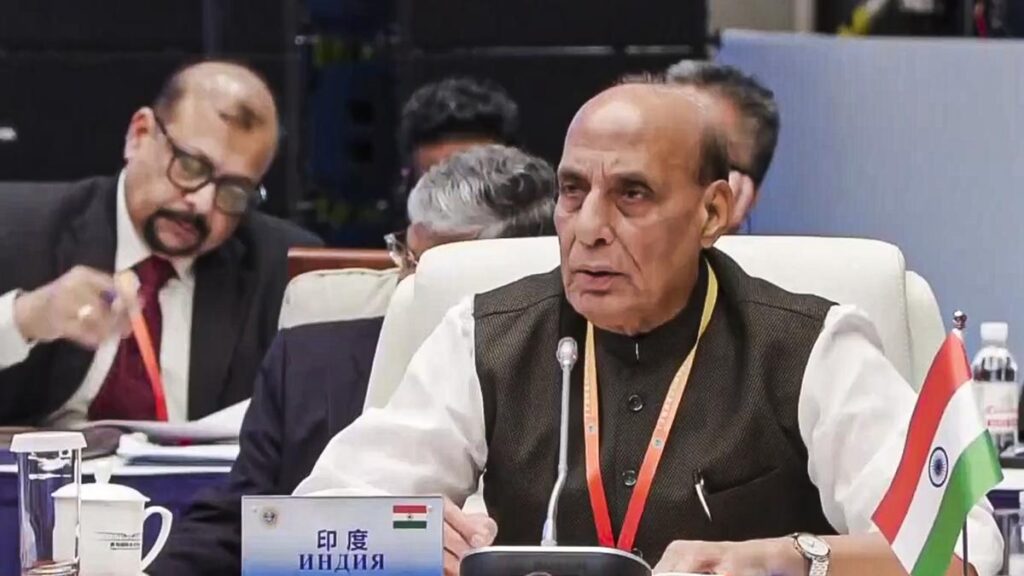
In a major development aimed at redefining regional security dynamics, India and the U.S. are set to ink a 10-year defence framework, a move that signifies growing convergence between the two democracies in the realm of defence and strategic affairs. This significant announcement was made public through a Pentagon statement on July 2, 2025, a day after Indian Defence Minister Rajnath Singh held a telephonic conversation with U.S. Secretary of Defense Pete Hegseth.
The planned 10-year framework is expected to be formalized when both defence ministers meet later this year. The new agreement will succeed previous bilateral defence understandings and will provide a structured roadmap for deepening cooperation between New Delhi and Washington across multiple dimensions of defence, military, and industrial collaboration.
Table of Contents
Strategic Partnership Enters a New Phase
The deal is more than a routine bureaucratic update—it’s a strategic pivot. With growing geopolitical challenges and the rise of aggressive powers in Asia, the U.S. sees India as a vital partner in maintaining regional security and counterbalancing threats. The Pentagon emphasized this by stating that Secretary Hegseth reaffirmed India’s status as a key defence partner in South Asia.
This partnership is not new, but what sets the latest defence framework apart is its ambition and comprehensive nature. Both nations are looking to capitalize on past successes while forging ahead with deeper integration, especially in defence industrial cooperation, joint military training, and technology transfer.
Critical Issues Discussed During High-Level Call
During their phone conversation, Rajnath Singh and Pete Hegseth tackled a series of pressing defence-related issues, most notably the delay in the delivery of GE F404 jet engines. These engines are critical components for powering India’s indigenous Light Combat Aircraft (LCA) Tejas. Singh urged the U.S. to expedite the supply, citing the importance of these engines to India’s air defence preparedness.
Additionally, the ministers discussed the proposed deal between Hindustan Aeronautics Limited (HAL) and GE Aerospace for the joint production of F414 jet engines within Indian territory. This deal holds massive potential for enhancing indigenous manufacturing and creating a long-term ecosystem for jet engine production in India. The finalization of this deal would mark a significant milestone under the broader strategy.
Addressing Delays and Strengthening Trust
The delay in the delivery of F404 engines has already caused HAL to miss its deadline for supplying Tejas Mark 1A aircraft to the Indian Air Force. Given this context, Singh’s call to expedite the delivery was not just a bureaucratic push but a strategic necessity. Reliable defence procurement timelines are essential for maintaining force readiness, and the conversation emphasized the importance of timely supply chains.
This issue also underscores the importance of the upcoming 10-year defence framework, which aims to institutionalize mechanisms that ensure smoother cooperation in such critical areas. Both sides understand that logistical delays can hamper trust and progress, which is why integrating defence supply chains is a top priority under the new deal.
February 2025 Joint Statement as a Foundation
The Pentagon statement acknowledged that the leaders reviewed the “considerable progress” made since the joint statement issued in February 2025 by President Donald Trump and Prime Minister Narendra Modi. That statement laid the foundation for enhanced defence cooperation, and the new 10-year agreement will act as a concrete follow-up on those promises.
This continuity and expansion signal the seriousness with which both nations are approaching their bilateral defence partnership. From increased military exercises to integration of logistics and defence technologies, the declaration represents the next logical step in strategic alignment.

Widening the Canvas of Collaboration
According to the Indian readout of the conversation, the leaders discussed a wide range of topics including training, military exchanges, and industry collaborations. These conversations reflect the multi-dimensional nature of modern defence cooperation. It’s no longer just about arms deals or defence pacts—it includes human resource development, technology sharing, innovation in AI-driven warfare, and cyber defence cooperation.
The Indian readout also emphasized that the ministers agreed to build on existing momentum and enhance cooperation across key pillars: interoperability, integration of supply chains, logistics sharing, and increased joint military exercises. All these components form the backbone of the new India, U.S. 10-year defence framework and are critical to achieving long-term defence resilience.
Importance of Interoperability and Logistics Sharing
In modern warfare, interoperability between allied forces is essential. As part of the 10-year defence framework, both nations plan to deepen their interoperability through joint training, standardized communication systems, and compatible weapon platforms. This will enable Indian and U.S. forces to operate together more efficiently during humanitarian missions, peacekeeping operations, or combat scenarios.
Another essential part of the framework is logistics sharing. With the Logistics Exchange Memorandum of Agreement (LEMOA) already in place, the upcoming deal will likely build upon this agreement to facilitate seamless support during joint operations and exercises. Shared logistics means Indian and U.S. forces can access each other’s military bases for refueling, repair, and resupply—providing significant strategic depth.
Focus on Defence Industrial Cooperation
A crucial element in the India, U.S. to ink 10-year defence framework is defence industrial cooperation. With India’s “Make in India” initiative gaining momentum, the U.S. sees a significant opportunity to shift portions of its defence manufacturing ecosystem to India. Joint ventures like the HAL-GE Aerospace deal are just the beginning. The framework is expected to include provisions for co-development of next-gen technologies, setting up defence corridors, and technology transfer agreements.
This collaboration could pave the way for India to become a global hub for defence production and exports. It would also help the U.S. diversify its supply chains and reduce over-reliance on a few countries, especially in the wake of global disruptions caused by pandemics and geopolitical tensions.

Geopolitical Implications of the 10-Year Framework
The India, U.S. to ink 10-year defence framework agreement carries far-reaching geopolitical implications. With rising Chinese assertiveness in the Indo-Pacific, both Washington and New Delhi recognize the need for a robust regional security architecture. The framework is expected to enhance naval cooperation, strengthen maritime domain awareness, and promote joint patrolling in critical sea lanes.
Furthermore, the deal reinforces India’s role in the Quadrilateral Security Dialogue (Quad) alongside the U.S., Japan, and Australia. As a cornerstone of the Indo-Pacific strategy, India is uniquely positioned to contribute to regional security and stability. This makes the 10-year framework not just a bilateral deal, but a pillar of broader multilateral security cooperation.
Joint Military Exercises to Get a Boost
Joint military exercises between India and the U.S., such as Yudh Abhyas, Tiger Triumph, and Cope India, are expected to receive a boost under the new framework. These exercises improve tactical understanding and foster people-to-people connections between military personnel. The framework will likely expand the frequency, scale, and scope of these drills, making them more scenario-driven and technologically advanced.
Cybersecurity and AI in Focus
Another emerging area of cooperation under the India, U.S. to ink 10-year defence framework will be cybersecurity and artificial intelligence (AI). With modern warfare increasingly relying on information dominance, both nations are looking to build resilience against cyber threats. Cooperation in AI-driven warfare systems, drone technology, and space-based intelligence will likely be prioritized.
A Mutually Beneficial Partnership
It is clear that the upcoming agreement is designed to be mutually beneficial. For the U.S., India represents a reliable partner in a volatile region. For India, the U.S. brings access to advanced military technology, cutting-edge R&D, and a dependable ally in the international arena.
As per the Indian Defence Ministry, the leaders have committed to fostering long-term cooperation that enhances defence readiness, boosts industrial capacity, and aligns strategic goals.
Conclusion: A New Era of Defence Cooperation
The deal signals the beginning of a new era in bilateral defence relations. With a focus on interoperability, industrial integration, strategic logistics, and technological innovation, the agreement will provide a robust and future-ready framework for cooperation.
While challenges such as delays in equipment delivery remain, the willingness of both nations to engage and resolve these issues is a testament to the strength of the partnership. As the two largest democracies in the world, India and the U.S. are setting the tone for what a resilient and forward-looking defence relationship should look like.
The defence framework is not merely a symbolic gesture—it is a blueprint for tangible cooperation that will shape the security architecture of South Asia and the Indo-Pacific for years to come.
Pingback: Businessman Gopal Khemka Shot Dead in Patna, 6 Years After Son’s Similar Killing - swiftheadlines.godsayhub.com