
A Sudden Scourge
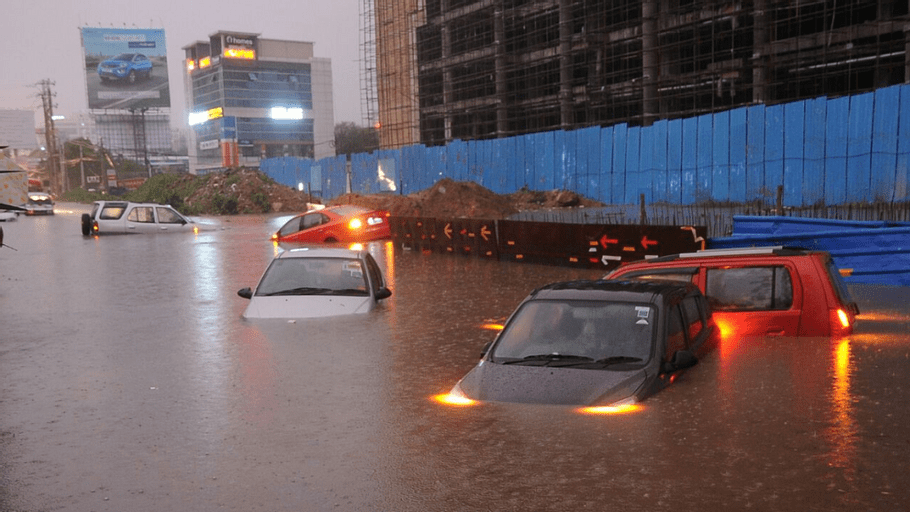
Hyderabad roads flood, On the night of June 11–12, 2025, Hyderabad was caught off-guard by a sudden and intense bout of rainfall. Main arterial roads in Santosh Nagar, Champapet, Malakpet, and adjoining neighborhoods succumbed quickly to severe waterlogging, forming treacherous waterways right in the heart of urban life.
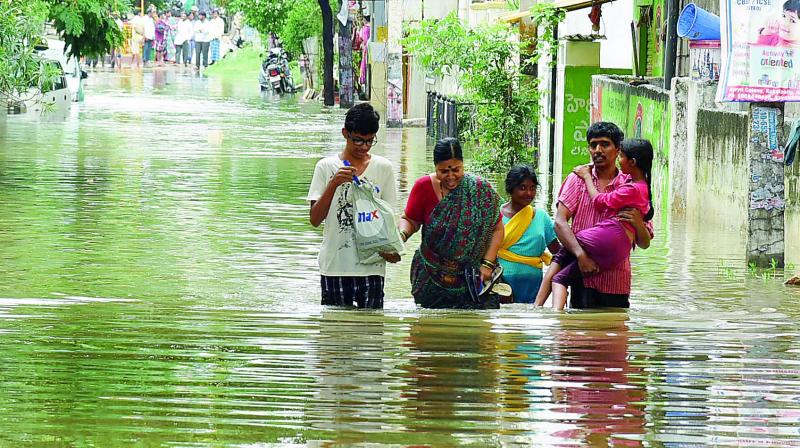
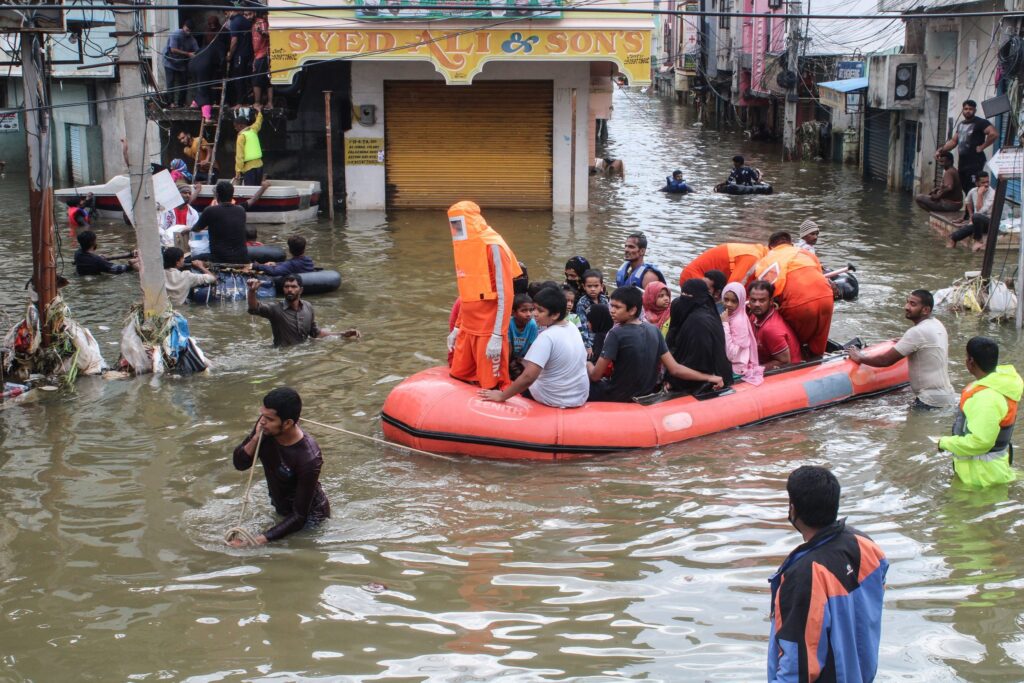
Locals reported streets submerged up to waist level, vehicles stalled mid-journey, and families trapped in ground-floor residences as water surged into homes unannounced. Social media was ablaze with videos of stranded commuters, cars pushing through knee-deep sludge, and rescue teams racing against time.
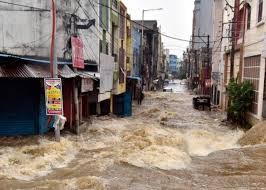
Table of Contents
Emergency Forces Mobilized
Responding swiftly, the National Disaster Response Force (NDRF) and Disaster Response Force (DRF) teams were deployed to critical areas. Their mission: drain off standing water, rescue vulnerable residents, and facilitate the reopening of roads. In parallel, coordinated efforts were initiated by the Army, with multiple columns sent to provide relief and set up emergency response control rooms at the Greater Hyderabad Municipal Corporation (GHMC) headquarters reddit.comdeccanchronicle.com+7indianexpress.com+7indiatoday.in+7.
As the deluge worsened, at least four Army columns reached low-lying zones like Begumpet, Nizampet, Hakimpet, and Alwal in Ranga Reddy district, alongside a 60-member NDRF team kept on standby deccanchronicle.com+7indianexpress.com+7business-standard.com+7. The Army even began distributing essentials and medical aid in slum clusters business-standard.com+4indianexpress.com+4mumbaimirror.indiatimes.com+4.
Human Toll and Response
Thankfully, the flash flooding did not result in widespread casualties in 2025. However, memories of previous flash floods—like Hyderabad’s devastating October 2020 floods, which claimed over 100 lives and triggered ₹9,000 crore in damage —rekindled vigilance among authorities and civilians alike.
Although no major loss of life was reported this time, numerous injuries, fractured roads, power cuts, and disruptions were documented. GHMC, in conjunction with NGOs, began emergency food distribution and water supply to vulnerable neighborhoods. Educational and office spaces in severely affected areas were shut temporarily to prevent mishaps.
2. Why Now? Understanding the Monsoon Surge (Hyderabad roads flood)
Early Monsoon & A Short Pause
India experienced the earliest onset of the Southwest Monsoon since 2009 on May 24, 2025, well ahead of the traditional starting date of June 1 timesofindia.indiatimes.com+4ap7am.com+4indiatoday.in+4. This brought intense early rains, particularly across Kerala, Karnataka, and Telangana. However, the monsoon then hit a temporary lull around May 29, disrupting the rhythm of rainfall economictimes.indiatimes.com.
Monsoon Revival Around June 12
The India Meteorological Department (IMD) forecasted a resurgence of monsoon activity between June 12 and 18, as a low-pressure system over the Bay of Bengal strengthened, fueling renewed rains over central and southern India timesofindia.indiatimes.com+8reuters.com+8timesofindia.indiatimes.com+8. Specifically for Hyderabad and broader Telangana, the IMD issued alerts for scattered rainfall with thunderstorms and gusty winds, teasing storms in urban zones hindustantimes.com+8asianage.com+8economictimes.indiatimes.com+8.
Continued Wet Spell Ahead
The IMD further outlined expectations for heavy to very heavy rainfall in the southern peninsula—encompassing Telangana—during June 12–15, and specifically heavy rain over coastal Karnataka, Konkan, and Goa during June 13–14 .
3. Flood Magnification: A Blend of Nature and Urbanity (Hyderabad roads flood)
Hyderabad’s Historical Flood Patterns
Hyderabad’s terrain and infrastructural choices have contributed to its recurrent flood problems. Over years, unchecked urbanization—often in natural lake catchments and wetlands—coupled with inadequate drainage, has transformed seasonal waters into urban hazards .
- In 2020, the city endured a catastrophic “Deep Depression BOB 02” event in October, leading to unprecedented flooding, 100+ fatalities, and widespread infrastructural damage en.wikipedia.org.
- Earlier instances, including the 1908 Great Musi floods and further significant events like 2000 and 2016, reflect deep-set vulnerabilities en.wikipedia.org.
Climate Signals & Urban Drainage Failures
The phenomenon isn’t merely episodic. Academic assessments indicate a three-fold increase in widespread extreme rainfall events (over 150 mm/day) in central India since the 1950s timesofindia.indiatimes.com+15en.wikipedia.org+15timesofindia.indiatimes.com+15. Add to that Hyderabad’s weakened drainage infrastructure—hampered by encroachment, garbage clogging, and poor planning—and the perfect storm for urban flooding emerges reddit.com+1timesofindia.indiatimes.com+1.
4. Administrative Pushback: HYDRAA vs. GHMC (Hyderabad roads flood)
A Shift in Responsibility
On June 12, 2025, amidst mounting criticism and a drive for accountability, Telangana’s government transitioned monsoon emergency operations from GHMC to the newly formed Hyderabad Disaster Response Asset Protection Agency (HYDRAA) hindustantimes.com+1timesofindia.indiatimes.com+1.
Why the Change?
- Overlapping Roles: Both GHMC and HYDRAA were engaged in similar dewatering and cleanup tasks, prompting duplication.
- Tender Irregularities: The revocation of ₹50 crore in GHMC monsoon-related contracts raised red flags and accelerated the restructuring timesofindia.indiatimes.com.
- Operational Efficiency: HYDRAA, a disaster-focused entity, is better aligned to coordinate with agencies like the HMWSSB, TGSPDCL, and state disaster forces timesofindia.indiatimes.com.
HYDRAA’s Game Plan
- To establish 130 monsoon emergency teams (12 personnel each) and 51 DRF teams (15 personnel each) strategically placed in flood-prone zones.
- Oversee stormwater drain blockage clearance, implement traffic diversions, inspect nalas and catchpits, and manage post-rainfall cleanup.
- GHMC remains tasked with pre-monsoon desilting, but post-rain efforts are now under HYDRAA’s watchdog indiatvnews.com+3hindustantimes.com+3timesofindia.indiatimes.com+3timesofindia.indiatimes.com.
5. City-Level Impacts: On the Ground Realities (Hyderabad roads flood)
Waterlogged Neighborhoods
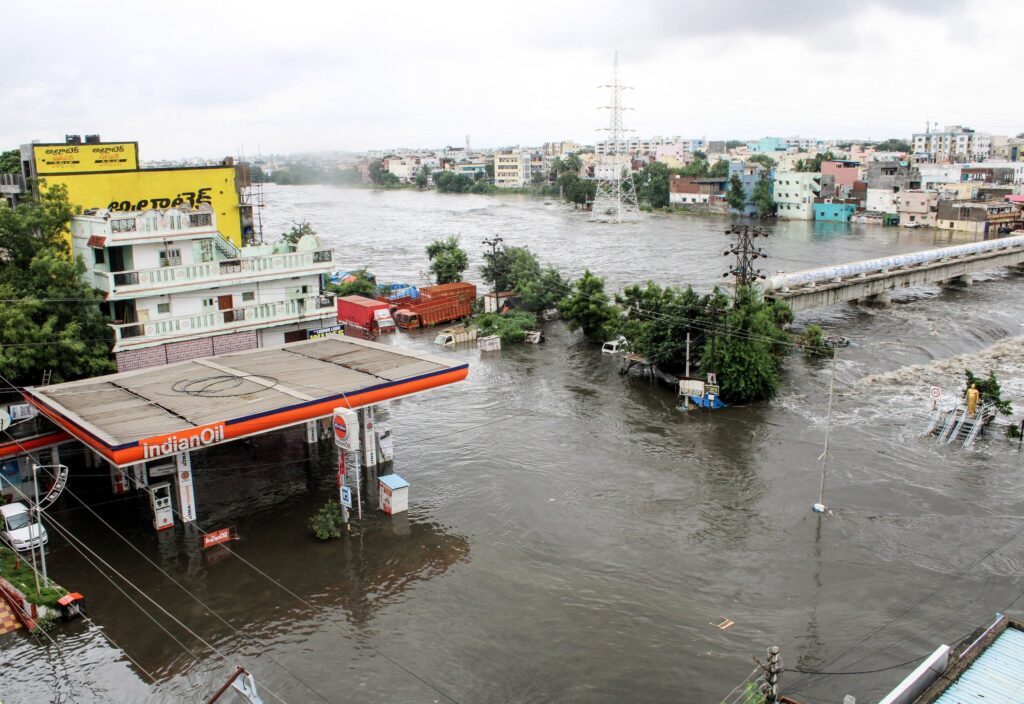
Major thoroughfares like Malakpet, Champapet, and Santosh Nagar witnessed knee- to waist-deep water within minutes. Residential colonies in low elevation zones reported ground-floor flooding. Urban transport—buses, autos, cars—ground to a halt, affecting thousands.
Traffic Mayhem & Commuter Distress
Waterlogged roads turned Hyderabad’s south into gridlock. Traffic signals failed, rounding intersections became perilous, and commuters were often stranded for hours. Some school buses braved flooded roads despite closures, squeezing through submerged zones .
Utilities in Disarray
Power outages struck multiple areas after poles were damaged or downed. Local electricity authorities scrambled to restore services while securing cables for public safety. Hospitals and essential services also braced for strain.
Rescue and Relief Mode
- Army and NDRF teams executed evacuations using boats and delivered emergency aid to marooned residents indianexpress.com+3business-standard.com+3hindustantimes.com+3.
- NGOs supplemented with food and water, while GHMC set up relief distribution centers.
- Control rooms at GHMC coordinated triage response for medical emergencies and communications routing.
Public Advisory & Awareness
Authorities issued alerts urging people to stay off flooded roads, postpone non-essential travel, and safeguard health. Measures were activated for preventing waterborne and vector-borne diseases in stagnant water zones.
6. Beyond Hyderabad: A Broader Monsoon Narrative (Hyderabad roads flood)
Karnataka & Kerala Also Affected
- The IMD warned of “widespread” rainfall in coastal and north-interior Karnataka until June 17, and “fairly widespread” across south-interior Karnataka until June 14 before intensification indianexpress.com+6hindustantimes.com+6indianexpress.com+6en.wikipedia.orgtimesofindia.indiatimes.com+1timesofindia.indiatimes.com+1.
- In Hubballi, Dharwad (Karnataka), torrential showers caused local waterlogging and infrastructural stress .
- Chennai also experienced intense storms and thunderstorms with wind gusts up to 50 km/h, under yellow and orange alerts .
- Kerala was hit with orange/yellow rainfall alerts for northern districts amid monsoon revival economictimes.indiatimes.com.
- Mumbai & Konkan-Goa were under yellow/orange alerts, with extremely heavy rainfall forecast June 13–14 en.wikipedia.org+11indiatvnews.com+11timesofindia.indiatimes.com+11.
Heatwave Still Lingers in the North
While the south endured rain, northern India—especially Punjab, Haryana, Delhi-NCR, and Rajasthan—continued wrestling with heat wave conditions, with temperatures surpassing 45 °C and record heat indexes indiatimes.com. Relief was expected after mid-June when western disturbances may bring cooling rain.
7. Reflections from the Ground: Voices of Hyderabad (Hyderabad roads flood)
Local Redditors and Hyderabadis voiced long-standing frustrations:
“It’s designed to fail. People in Hyderabad don’t wanna admit it… no proper drainage nor public transportation infrastructure.” indiatimes.comhindustantimes.comreddit.com
“Witnessing heavy rain fall and flooding in Hyderabad… frequency is increasing due to global climate shifts… but improper land management and lake encroachments has added to the problems.” reddit.com
These insights highlight Hyderabad’s recurring struggle: a city besieged by climate-driven rainfall, yet hobbled by infrastructure and institutional inertia. Local voices demand far‑reaching reforms—from drainage upgrades to enforcing sustainable urban planning.
8. Charting a Safer Path: The Way Forward (Hyderabad roads flood)
Short‑Term & Immediate Measures
- Pre‑monsoon Desilting: GHMC must rigorously inspect and unclog stormwater drains, catchpits, and nalas before every monsoon.
- Garbage & Debris Control: Enforce bans on dumping garbage, construction materials, and silt into the drains.
- Emergency Drains: HYDRAA’s rapid deployment teams should stay equipped to pump out standing water immediately.
- Public Alerts: Implement real‑time alerts to warn citizens before small waterlogging events turn dangerous.
Mid‑Term & Infrastructure Upgrades
- Smart Urban Drainage: Employ sensors and IoT to monitor water levels in drains, enabling automated pump activation.
- Restore Natural Water Systems: Desilt and rehabilitate Hyderabad’s natural lakes and intervals to enhance absorption capacity.
- Permeable Urban Spaces: Encourage green spaces and porous pavements in new developments to curb run-off.
- Strengthen Enforcement: Enforce stringent penalties for contractors and developers who encroach on drain systems.
Long‑Term & Systemic Planning
- Advanced Flood Modeling: Invest in predictive models that consider urban topology, historic rains, and future climate scenarios.
- Climate‑Resilient Urban Policy: Update building codes and zoning laws to mandate climate adaptation measures.
- Community Involvement: Educate and mobilize local neighborhood groups in monsoon preparedness.
- Integrated Governance: Foster stronger coordination among GHMC, HYDRAA, IMD, HMWSSB, TSSPDCL, and other agencies.
9. Conclusion: A Wake‑Up Call with Broader Resonance (Hyderabad roads flood)
The Hyderabad roads flood of June 2025 is more than a one-night event—it’s a microcosm of a larger challenge facing Indian cities:
- Climate Signals: An intensifying monsoon, early onset, and clustering of extreme rainfall events.
- Urban Vulnerability: Legacy of encroachments, fragile drainage, and rapid urban growth outpacing infrastructure.
- Administrative Lags: Fragmented responsibility, tender controversies, and delayed enforcement.
- Community Impact: Loss of mobility, strain on city services, and undercurrents of public anxiety.
This flood episode—and the proactive response by NDRF, Army multiple teams, and HYDRAA—demonstrates capability. Yet, unless Hyderabad advances from reactive rescue to proactive resilience, floods will persist.
Key Focus Areas Ahead:
- Execution of HYDRAA’s 130 emergency teams.
- Streamlined oversight, eradicating contractor favoritism and reinforcing public accountability.
- Reinforced infrastructure—not just desilting, but rewiring the entire drainage ecosystem.
- Public participation & awareness, empowering citizens to be watchdogs and first responders to micro-floods.
Hyderabad’s adaptive capacity during the June 2025 rounds of flooding could, if leveraged smartly, serve as a model for climate-resilient Indian metros—vigilant, modern, and truly responsive to nature’s warnings.