
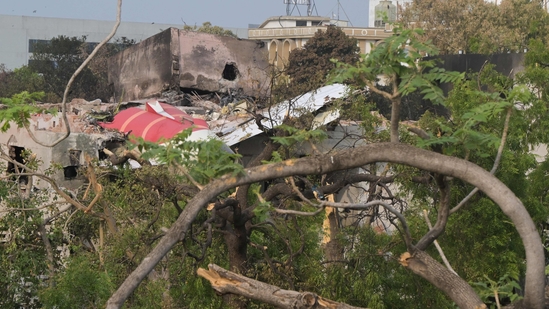
Air India Plane Crash, On the evening of June 12, 2025, India witnessed one of its most devastating aviation disasters in recent history. Air India Flight 171, en route from Ahmedabad’s Sardar Vallabhbhai Patel International Airport, crashed moments after takeoff, killing 241 out of the 242 people on board. The chilling final words from the cockpit—“Thrust not achieved… falling… Mayday! Mayday! Mayday!”—echo across the country as authorities scramble to uncover the cause of the fatal crash.
Table of Contents (Air India Plane Crash)
The Final Message (Air India Plane Crash)
According to a preliminary report from the Ahmedabad Police and ATC logs, the last communication from Flight 171’s cockpit was a distress call that has now become the focal point of the investigation. Just seconds before all contact was lost, the pilot relayed a clear Mayday signal, warning air traffic controllers of critical thrust failure during takeoff.
The cockpit transmission, “Thrust not achieved… falling… Mayday! Mayday! Mayday!” came as the aircraft attempted to leave the ground but reportedly struggled to generate sufficient power. The aircraft’s inability to achieve the required thrust has raised serious concerns and is now under detailed investigation by the Directorate General of Civil Aviation (DGCA), aircraft engineers, and international aviation safety bodies.
Scene of the Tragedy
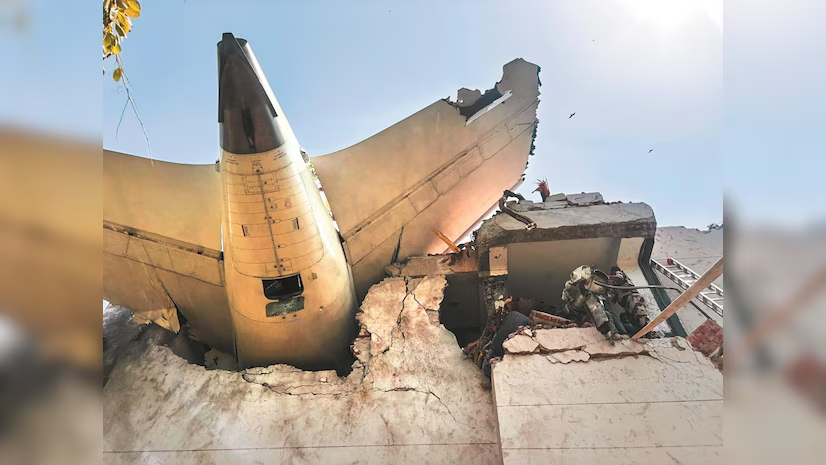
The crash occurred within close proximity of the runway. Officials stated that the aircraft used nearly the entire 3.5-kilometer runway—an unusually long takeoff roll for a wide-bodied aircraft, which typically requires only 2.5 to 3 kilometers under standard operational conditions. The plane finally lifted off the ground but failed to gain altitude, eventually nose-diving into an open field near the outskirts of Ahmedabad.
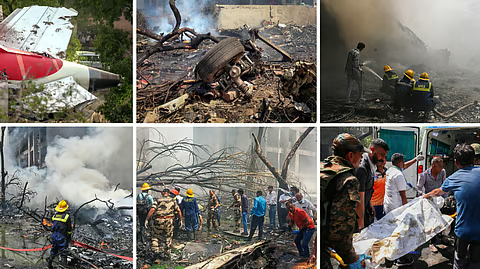
Eyewitnesses described a terrifying scene. “The plane was barely off the ground, it was struggling to climb, and then it just tilted and fell with a thunderous crash,” said Ravi Patel, a local resident who witnessed the tragedy unfold. Emergency response units rushed to the site within minutes, but the scale of the destruction left little hope for survivors.
Survivor’s Account (Air India Plane Crash)
Miraculously, one person survived the Air India plane crash—42-year-old Meena Chaudhary, seated in the rear section of the aircraft. She was pulled out from the wreckage by rescue teams, suffering multiple fractures and burns, but conscious.
“I don’t know how I survived,” Meena shared from her hospital bed. “There was a loud bang, and everything shook. People were screaming. I closed my eyes and prayed. When I opened them, I was on the ground, surrounded by flames and metal.”
Medical officials at Ahmedabad Civil Hospital have said she is in stable condition and recovering, though she remains in shock.
No Warning Signs
What makes the Air India plane crash even more puzzling is the complete absence of prior warnings or irregularities. According to ATC records and internal sources from Air India, the flight crew did not request any last-minute adjustments—no runway change, no flap reconfiguration, no reports of technical issues before takeoff.
Weather conditions were also favorable. Visibility was clear, and although temperatures were high, they remained within permissible operational limits for the aircraft model involved—a Boeing 787 Dreamliner. No thunderstorms, rain, or crosswinds were present at the time.
CCTV footage from the airport confirmed the extended takeoff attempt. Analysts noted no visible signs of engine malfunction, fire, or structural failure before the aircraft left the ground. “Everything appeared normal until the very last seconds,” a senior official familiar with the incident remarked.
Mechanical or Human Error? (Air India Plane Crash)
One of the primary angles investigators are examining is whether a mechanical failure prevented the engines from producing the required thrust. The distress message seems to suggest that despite full throttle input, the engines did not respond as expected. However, until the flight data recorder (FDR) and cockpit voice recorder (CVR)—commonly referred to as the “black boxes”—are analyzed, any conclusions remain speculative.
Air India, in a statement, confirmed that the aircraft involved had undergone routine maintenance just two weeks prior and was cleared for service without any reported anomalies. They also stated that the pilot and co-pilot were both highly experienced, with more than 15,000 combined flying hours, including thousands on the same aircraft model.
“This is not something that should happen during a standard takeoff. Either something failed catastrophically, or something unexpected occurred,” said aviation expert Captain Aditya Malhotra.
Focus on the Black Box
The FDR and CVR have been recovered from the wreckage and sent to the DGCA’s laboratory in Delhi for analysis, with assistance from Boeing engineers and U.S.-based aviation experts. These devices will provide critical insights into engine performance, thrust levels, control inputs, and cockpit communications in the minutes leading up to the crash.
“The black box holds the key,” an investigator emphasized. “Until we analyze the data, everything is theory. But the last recorded words do suggest an unexpected loss of thrust.”
Victims and National Mourning (Air India Plane Crash)
Among the 241 who perished were 15 crew members and 226 passengers, including several children and international travelers. Families gathered at Ahmedabad Airport in anguish, waiting for official confirmation of loved ones lost in the crash.
Prime Minister Narendra Modi expressed his condolences and promised a thorough investigation into the Air India plane crash. “The nation mourns the loss of so many lives in this tragic incident. I have directed all concerned departments to assist the victims’ families and ensure a transparent inquiry.”
June 13 was declared a national day of mourning. Flags flew at half-mast, and Air India suspended all operations for 24 hours in respect.
Air India’s Response
In a press release, Air India expressed profound sorrow and pledged full cooperation with authorities. The airline has established a dedicated support line for affected families and is offering compensation and assistance for funeral and legal arrangements.
“We are deeply saddened by the loss of lives in the tragic crash of Flight 171,” the statement read. “Our hearts go out to the families and friends of the passengers and crew. We are working round-the-clock with government authorities to understand the cause of this devastating event.”
Impact on Indian Aviation
This Air India plane crash has cast a dark shadow over India’s aviation sector, which had been steadily recovering after the pandemic years. While Air India, under Tata Group management, has been upgrading its fleet and systems, this disaster could significantly affect public confidence.
Aviation analysts are already calling for stricter maintenance oversight, better monitoring systems, and a review of operational procedures. “This is a wake-up call,” said aviation columnist Priya Nair. “We need to make sure our aircraft are not just airworthy, but safe under all operational scenarios.”
Global Reactions and Boeing’s Role
Given that the aircraft was a Boeing 787 Dreamliner, global aviation agencies have shown keen interest in the investigation. Boeing issued a statement offering condolences and promising full cooperation.
“We are saddened by the tragic loss of Flight 171 and are in close contact with Air India and Indian authorities to provide technical support,” the company stated.
The U.S. National Transportation Safety Board (NTSB) and Federal Aviation Administration (FAA) have also dispatched experts to assist in decoding the black box and analyzing possible manufacturing or design flaws.
A History of Safety
Air India, one of the oldest airlines in Asia, has had a relatively safe operational history in recent decades. The last major crash occurred in 2010, when an Air India Express flight overshot a runway in Mangalore, killing 158 people.
Since then, the airline had made significant improvements in safety standards, training, and aircraft acquisition. The 2025 Air India plane crash is a painful setback to that progress.
Emotional Toll on Families (Air India Plane Crash)
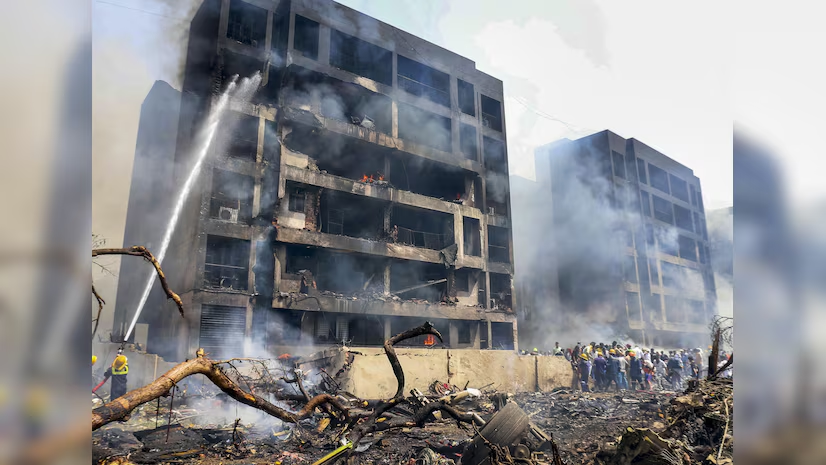
At the crash site, scenes of grief were overwhelming. Families wailed, clutching photographs and documents, hoping for a miracle. Counseling centers and emergency support desks were set up to help families cope.
“I lost my wife and two children,” said Anil Khanna, who had dropped them off at the airport just hours earlier. “I don’t know how I will live after this.”
Religious groups, volunteers, and NGOs arrived to help with last rites and provide emotional and logistical support.
Government Inquiry Commission
The Civil Aviation Ministry has announced the formation of a high-level commission to probe the crash. It will include members from the DGCA, Air India, independent aviation experts, and representatives from Boeing.
The commission will focus on:
- Mechanical performance
- Fuel quality and loading records
- Air traffic control logs
- Maintenance records
- Pilot training history
- Flight software diagnostics
Preliminary findings are expected within 30 days, though a complete report could take several months.
Moving Forward
While the black box analysis will eventually provide clarity, the human cost of the Air India plane crash remains beyond measure. The aviation industry must now look inward and reflect on what went wrong—not just mechanically, but procedurally and institutionally.
This disaster is a somber reminder that aviation, despite being statistically the safest mode of travel, is not without risk. It is now the responsibility of authorities, aircraft manufacturers, and airlines to ensure that every lesson from this tragedy is learned—and acted upon.
Conclusion
The Air India plane crash on June 12, 2025, has left an indelible scar on the nation’s psyche. The haunting final words of the pilot will remain etched in memory, underscoring the fragility of human life and the importance of aviation safety. As India grieves, the world waits for answers. And for the families who lost their loved ones, no technical explanation will ever truly fill the void.