
Tehran: Iran is facing one of its deadliest periods of internal unrest in recent history as protests sweeping across the country have reportedly claimed the lives of nearly 2,000 people. The shocking death toll has intensified global concern and highlighted the scale of violence used to suppress widespread demonstrations demanding economic relief and political change.
How the Protests Began
The protests initially erupted over worsening economic conditions, including soaring inflation, unemployment, fuel price hikes, and a sharp decline in living standards. Ordinary citizens, already struggling with sanctions and economic mismanagement, poured onto the streets in cities and towns across Iran to express their anger and frustration.
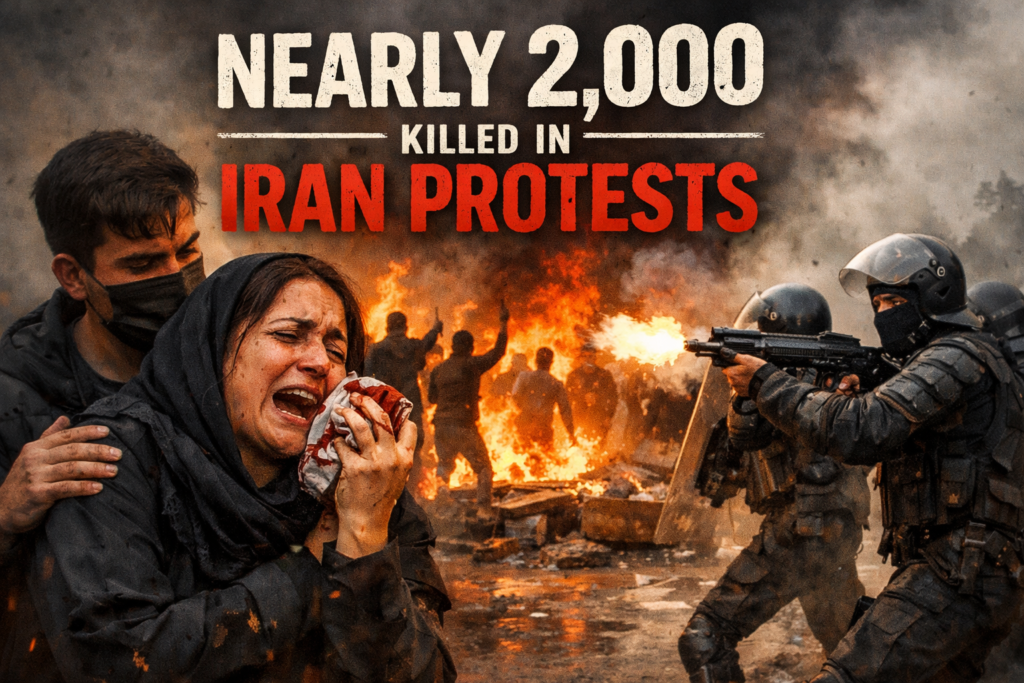
What began as economic demonstrations quickly evolved into broader political protests, with many demonstrators openly criticizing the government and calling for systemic reforms. Slogans against corruption, authoritarian rule, and lack of freedoms became common as the movement gained momentum.
Brutal Crackdown and Rising Death Toll
Security forces responded forcefully as protests intensified. According to officials and activists, live ammunition, tear gas, and mass arrests were used to disperse crowds. The situation rapidly escalated into violent clashes between demonstrators and state security forces.
An Iranian official has now acknowledged that nearly 2,000 people, including civilians and security personnel, have been killed since the unrest began. Human rights groups believe the actual number could be higher, as communication blackouts and restricted media access have made independent verification extremely difficult.
Hospitals in several cities have reportedly been overwhelmed with injured protesters, while families search desperately for missing relatives amid widespread arrests.
Internet Shutdowns and Media Restrictions
To control the flow of information, authorities imposed internet blackouts and severe restrictions on social media platforms. These measures have limited the ability of protesters to organize and share information while also making it harder for the outside world to assess the true scale of the violence.
Journalists inside the country face tight restrictions, and many foreign media outlets have been unable to report freely from the ground.
Government Response
Iranian authorities have blamed “foreign enemies” and alleged extremist groups for fueling the unrest. Officials maintain that security forces are acting to restore stability and protect national security, accusing protesters of vandalism and violence.
At the same time, government leaders have urged calm and warned that continued demonstrations would be met with firm action. Despite this, protests have continued in several regions, indicating deep-rooted public anger.
International Reaction
The rising death toll has drawn sharp reactions from the international community. Several countries and global human rights organizations have condemned the use of lethal force against protesters and called for accountability.
There have also been renewed calls for sanctions and diplomatic pressure on Iranian officials accused of ordering or overseeing the crackdown. However, Iran has rejected outside criticism, describing it as interference in its internal affairs.
Human Cost of the Crisis
Beyond the statistics, the protests have left a deep emotional scar across the nation. Families mourn loved ones, communities grapple with fear and uncertainty, and thousands of people reportedly remain in detention.
Many Iranians say the unrest reflects long-standing grievances over lack of opportunities, political repression, and economic hardship. For them, the protests are not just about prices or policies, but about dignity and the future of the country.
What Lies Ahead
As Iran struggles to contain the unrest, the situation remains volatile. The government faces mounting pressure both domestically and internationally, while protesters show little sign of backing down.
Whether the crisis leads to meaningful reforms or further bloodshed remains uncertain. What is clear, however, is that the protests have exposed deep divisions within Iranian society and marked a turning point in the country’s recent history.