

The French government collapses once again, throwing the nation into a fresh political storm and deepening its economic uncertainty. On Monday, Prime Minister François Bayrou lost a dramatic confidence vote in parliament, forcing him to step down after only nine months in office. His fall marks the second consecutive prime minister in less than a year to be ousted through a no-confidence motion, exposing the fragility of President Emmanuel Macron’s administration and the fractured state of French politics.
Table of Contents (french government collapses)
The Vote That Toppled Bayrou (french government collapses)
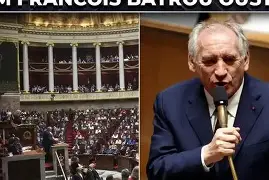
François Bayrou staked his government’s survival on a controversial €44 billion savings plan aimed at reining in France’s ballooning public debt. The plan included scrapping two national holidays and freezing government spending – measures that were widely unpopular among both lawmakers and the public.
When the vote came, 364 MPs voted against him, while only 194 supported him. The number opposing Bayrou was far beyond the 280 votes required to topple the government. This overwhelming rejection not only sealed Bayrou’s fate but also revealed the extent of the opposition against Macron’s centrist approach in a fragmented parliament.
Bayrou’s downfall follows that of his predecessor, Michel Barnier, who lost his position in December after a similar confidence defeat. The rapid succession of failed prime ministers underscores the volatility in France’s political system as it grapples with rising debt, social unrest, and the growing power of both far-right and far-left parties.
Macron’s Dilemma After the French Government Collapses
With the French government collapses narrative dominating headlines, President Emmanuel Macron faces his toughest challenge yet. The Élysée Palace confirmed that Bayrou would tender his resignation on Tuesday morning, after which Macron must swiftly appoint a new prime minister. However, Macron’s options are limited and fraught with risk.
Potential candidates include Armed Forces Minister Sébastien Lecornu and Justice Minister Gérald Darmanin. Yet whoever takes the role will inherit a poisoned chalice – a deeply divided parliament, hostile opposition parties, and an economy under pressure from climbing borrowing costs. The political system, built on compromise, is now deadlocked. The far left and far right have both signaled they will immediately move for another no-confidence vote if Macron once again nominates a centrist figure.
This raises a pressing question: should Macron appoint someone from outside his camp, or risk repeating the cycle with another short-lived prime minister? Naming a figure from the right could alienate the left, while choosing a left-leaning leader would instantly be rejected by the conservatives. The gridlock seems almost impossible to break.
Economic Fallout as French Government Collapses (french government collapses)
The timing of this collapse could not be worse for France’s economy. Investors have already shown signs of nervousness. Bond yields on French government debt – effectively the interest rate demanded by investors – have risen above those of Spain, Portugal, and even Greece, countries once synonymous with the eurozone debt crisis. Such an inversion signals growing concern about France’s fiscal health.
A credit rating downgrade is also looming. France’s sovereign debt rating is up for review later this week, and analysts warn that the political chaos will only add to pressure from ballooning deficits. If downgraded, France’s borrowing costs would climb even higher, making it more expensive for the government to finance its debt.
In his final address to lawmakers, Bayrou warned of the harsh fiscal reality:
“You have the power to bring down the government, but you do not have the power to erase reality. Expenses will continue to rise, and the burden of debt, already unbearable, will grow heavier and more costly.”
His words were both a warning and an admission of defeat. By rejecting his austerity plan, lawmakers may have postponed immediate pain, but they have not resolved the underlying problem: France’s spiraling debt and rising interest obligations.
The Roots of Instability (french government collapses)
The current turmoil can be traced back to Macron’s controversial decision last year to call a snap election. Angered by the far-right National Rally’s strong showing in the May 2024 European Parliament elections, Macron sought to reassert control through a new parliamentary vote. The gamble backfired. His centrist bloc lost ground, while both the far right and far left gained seats, leaving the National Assembly fragmented and unstable.
Since then, three prime ministers – Barnier, Bayrou, and whoever comes next – have faced the near-impossible task of passing legislation in this fractured landscape. Every major policy becomes a battlefield, and the constant risk of no-confidence votes leaves the government in a perpetual state of fragility.
Public Reaction and Street Protests
The news that the French government collapses yet again has fueled anger and frustration among the public. Demonstrators gathered in cities like Clermont-Ferrand on Monday, staging what they called “Bayrou’s farewell party.” Protesters clinked glasses, waved banners, and mocked the prime minister’s downfall, reflecting the deep cynicism many citizens feel toward their political leaders.
The far left has seized the moment to mobilize. They have called for nationwide protests on Wednesday under the slogan “Bloquons tout” – meaning “Let’s block everything.” Trade unions are preparing another round of demonstrations for September 18, raising the specter of widespread strikes and street unrest.
France has a long tradition of mass protests and worker mobilization, and with public trust in government collapsing, the likelihood of escalating unrest is high. The political crisis may soon transform into a social one, paralyzing the country’s economy even further.

Far-Right Momentum and the Shadow of Marine Le Pen
Perhaps the biggest political beneficiary of the crisis is Marine Le Pen’s far-right National Rally party. Already riding high from their success in the European elections, the party is well positioned to capitalize on the collapse of Macron’s centrist bloc.
Recent polls suggest that if another snap parliamentary election were held, the National Rally would likely emerge as the largest force, followed by the left, with Macron’s centrists relegated to third place. Such a result would dramatically shift the balance of power in France and potentially pave the way for the far right to eventually win the presidency in 2027.
Le Pen has already demanded that Macron dissolve parliament. But the president is reluctant to do so, knowing that fresh elections would likely strengthen his enemies and weaken his own position. Still, the pressure may prove overwhelming if instability continues.
International Ramifications (french government collapses)
The crisis in France reverberates beyond its borders. At a time when wars are raging in Ukraine and the Middle East, Europe can ill afford political paralysis in one of its most powerful nations. Instability in Paris provides opportunities for adversaries like Russia’s Vladimir Putin, who thrives on European disunity, and for former U.S. President Donald Trump, who has often mocked Europe’s weaknesses.
France plays a central role in NATO, the European Union, and global diplomacy. A government consumed by internal strife is less able to lead abroad, diminishing Europe’s collective influence at a precarious geopolitical moment.
The Next Prime Minister’s Challenge
Whoever succeeds Bayrou will inherit a daunting set of challenges:
- Restoring stability in a parliament where opposition parties smell blood.
- Addressing the fiscal crisis without triggering mass protests.
- Rebuilding trust with a public that feels betrayed by years of political failures.
- Navigating France’s role on the international stage while domestic chaos grows.
The budget fight will be especially difficult. The Socialists demand higher taxes on the wealthy and a rollback of Macron’s business-friendly tax cuts. Conservatives in Les Republicains fiercely oppose these measures, making compromise nearly impossible. Any new austerity measures risk triggering the same backlash that brought down Bayrou.
Macron’s Shrinking Room for Maneuver
As the French government collapses, Macron himself faces increasing calls to resign or call new elections. But he has vowed to serve out his mandate until 2027. His challenge is to preserve credibility in a political climate where every move seems to backfire.
If he chooses another centrist prime minister, opposition parties are prepared to launch an immediate no-confidence vote. If he attempts to appoint a leader from the right or left, the other side will block the move. This catch-22 leaves Macron cornered, with no easy solutions.
A Crisis of Confidence in Democracy (french government collapses)
The deeper issue underlying the current crisis is a collapse of public faith in France’s democratic institutions. Citizens are disillusioned with politicians who seem unable to govern effectively. Each time the French government collapses, it reinforces the perception that the political system is broken and incapable of solving real problems like unemployment, inflation, and the cost of living.
The growing appeal of populist parties – both far right and far left – reflects this disillusionment. Many French citizens no longer believe traditional centrist leaders can deliver meaningful change. This crisis is not just about one prime minister’s downfall; it is about the future direction of the entire French Republic.
Looking Ahead
The immediate future is uncertain. Macron must appoint a new prime minister within days, but whoever he chooses will face enormous hurdles. Protests are looming, the bond markets are restless, and the threat of a credit downgrade hangs over the economy.
At the same time, France’s political opposition is preparing for the long game. The far right senses that power is within reach, either through another snap election or in the 2027 presidential contest. The left hopes to rally workers and young people through mass mobilizations.
What is clear is that the phrase French government collapses has become symbolic of a larger crisis – one that combines political deadlock, economic strain, and social unrest. Until a stable governing coalition can be formed, France is likely to lurch from one crisis to another.

Conclusion (french government collapses)
The collapse of François Bayrou’s government marks a dramatic moment in France’s ongoing political saga. By losing a no-confidence vote, he becomes the latest casualty of a fractured parliament and an angry electorate. For Macron, the challenge is existential: he must find a way to restore stability, or risk watching his presidency unravel.
The French government collapses, but the underlying issues remain – rising debt, public discontent, and a fractured political landscape. The coming weeks will be decisive in determining whether France can find a path back to stability, or whether this latest crisis is merely a prelude to even greater upheaval.
Pingback: WNBA Playoffs 2025: Ultimate Battle Among Eight Teams for Championship Glory - swiftheadlines.godsayhub.com