

Iran-Israel news continues to dominate global headlines as the latest developments from the Middle East impact air travel and passenger safety. Following missile strikes by Iran targeting US military bases in Qatar and Iraq, including the strategic Al Udeid Air Base in Qatar, significant disruptions rippled across international airspace. The escalating Iran-Israel news saga has forced several nations and airlines to respond with heightened security measures and advisories.
Table of Contents
Airspace Reopens in Qatar
In a recent turn of events, Qatar has officially reopened its airspace after a temporary closure prompted by heightened tensions and missile attacks linked to the ongoing Iran-Israel news conflict. The closure had brought several international flights to a halt on Monday, affecting thousands of travelers. Qatar’s Foreign Ministry, citing national security concerns, had shut down its airspace as Iran launched a series of ballistic missile attacks that raised alarm bells across the Gulf region.
On Tuesday, the Qatari authorities declared the re-opening of their airspace, providing some relief amid the continued volatility surrounding Iran-Israel news. Flights that had been suspended are now gradually resuming, although airlines remain cautious, prioritizing the safety of passengers and crew.

IndiGo Issues Fresh Advisory
Responding to the recent developments in Iran-Israel news, Indian low-cost carrier IndiGo issued a detailed travel advisory. The airline confirmed that it is “prudently and progressively resuming operations” across affected Middle Eastern routes. IndiGo emphasized that all decisions are based on real-time risk assessments and that traveler safety remains its top priority.
“As airports across the Middle East gradually reopen, we are prudently and progressively resuming operations on these routes,” IndiGo stated. “We continue to monitor the situation closely and are fully considering the safest available flight paths to ensure secure and seamless travel.”
IndiGo further urged passengers to stay informed through their official website and mobile application, encouraging flexibility and cooperation as Iran-Israel news evolves. Their transparent communication strategy aims to keep the public updated on potential risks and changes to schedules as regional conditions shift.
Emergency Landing in Nagpur
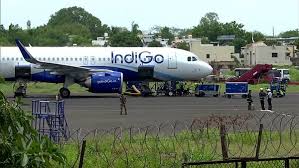
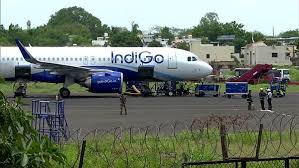
In a separate but alarming incident tied to the general unrest caused by the Iran-Israel news, an IndiGo flight — 6E 2706, traveling from Muscat to Delhi via Kochi — was forced to make an emergency landing at Nagpur airport on June 17. The reason? A bomb threat that had been received mid-flight.
The flight’s captain, following standard safety protocols, requested emergency clearance, and the plane landed safely in Nagpur. All passengers were evacuated, and a bomb disposal squad was deployed to inspect the aircraft. Although no explosive device was ultimately found, the incident is being seen as symptomatic of the fear and uncertainty spreading due to the escalating Iran-Israel news narrative.
This scare adds another layer of concern for aviation authorities already grappling with flight path alterations, airspace closures, and logistical hurdles in the wake of the Iran-Israel news.
Emirates Adjusts Routes
In response to the growing Iran-Israel news, Emirates Airlines, one of the world’s largest international carriers, announced route adjustments for flights scheduled on June 23. Although the airline confirmed that no flights were diverted, it did acknowledge that several had been rerouted to ensure maximum safety.
Emirates noted, “Due to the recent regional situation, a number of Emirates flights were rerouted enroute to Dubai on 23 June, but there were no diversions. After a thorough and careful risk assessment, Emirates will continue to operate flights as scheduled, using flight paths well distanced from conflict areas.”
This statement underlines the delicate balancing act airlines must perform — maintaining operational continuity while responding to the unpredictable developments in Iran-Israel news.
Qatar Airways Resumes Flights
Qatar Airways, the national carrier of Qatar, has also resumed operations following the reopening of Qatari airspace. The airline confirmed that it is taking all necessary precautions and has deployed additional staff at Hamad International Airport to manage the flow of returning flights and assist passengers.
In a statement reflecting the ongoing crisis, Qatar Airways said, “Our focus at this time is to help our passengers return home or reach their onward journey safely and smoothly. We’ve deployed extra ground staff at Hamad International Airport to support you as we resume operations.”
Qatar Airways encouraged travelers to check their flight status on their official website or app, as schedules remain subject to change due to the fluctuating situation shaped by Iran-Israel news.
The Strategic Importance of Al Udeid Air Base
The attacks on Al Udeid Air Base are central to the recent escalation in Iran-Israel news. As the largest US military installation in the Middle East, Al Udeid is a critical node in America’s regional defense network. Iran’s targeting of the base marks a provocative escalation and signals Tehran’s intent to project power amid ongoing hostilities with Israel.
According to military analysts, Iran’s decision to strike US-linked targets in Qatar and Iraq is a calculated effort to demonstrate its regional reach. In the context of Iran-Israel news, these actions are viewed as a response to Israel’s covert operations and airstrikes on Iranian-linked assets across Syria and Lebanon.
The Bigger Picture: Iran-Israel News and Global Aviation
The wider impact of Iran-Israel news on global aviation cannot be understated. Airlines operating in and around the Middle East are being forced to alter flight paths, delay schedules, and re-evaluate risk management strategies. From passenger confidence to insurance premiums, every aspect of the aviation sector is feeling the pressure.
According to aviation safety experts, air carriers must now factor in geopolitical risks alongside traditional flight planning elements. “Conflict zones are becoming increasingly unpredictable,” said one expert. “The current Iran-Israel news highlights the urgent need for better coordination between governments, airlines, and international aviation bodies.”
Passenger Safety and Public Communication
In the wake of the latest developments in Iran-Israel news, airlines are prioritizing clear communication and support services. IndiGo, Emirates, and Qatar Airways have all updated their travel advisories to reflect current risks and precautions.
Passengers are being urged to remain patient and cooperative, as operational decisions may be made at short notice. Many airlines have also waived rescheduling and cancellation fees for affected routes, providing flexibility to travelers amid the uncertainty stemming from Iran-Israel news.
Humanitarian Implications
Beyond the logistics of aviation, the Iran-Israel news has significant humanitarian consequences. With hundreds of flights disrupted and airspace restrictions affecting emergency evacuations and medical travel, vulnerable populations are at heightened risk. NGOs and aid agencies are calling for the protection of humanitarian corridors and urging governments to ensure that conflict-related airspace closures do not hamper emergency response operations.
The United Nations has expressed concern about the growing instability in the region, with a particular focus on how Iran-Israel news is impacting civilian lives, international peacekeeping missions, and refugee populations.
Reactions from Global Leaders
World leaders are continuing to respond to the growing crisis in the Middle East. The United States has reiterated its commitment to protecting its assets and allies in the region, while also urging restraint from both Iran and Israel.
Meanwhile, European Union officials have called for an emergency summit to address the growing implications of Iran-Israel news on global security and trade. The EU’s foreign policy chief stated, “We are deeply concerned about the escalating situation between Iran and Israel. There is a real danger of broader conflict, and this must be avoided at all costs.”
Conclusion: What Lies Ahead?
As the Middle East remains a flashpoint of geopolitical tension, Iran-Israel news will likely continue to influence not just military and political developments but also everyday aspects of global travel, business, and communication. With Qatar reopening its airspace and major airlines like IndiGo, Emirates, and Qatar Airways adapting to the evolving scenario, the aviation sector is cautiously optimistic but remains on high alert.
Travelers are advised to stay informed, adhere to airline advisories, and avoid unnecessary travel to conflict-prone areas. As events continue to unfold, the world watches closely — hoping for de-escalation, but preparing for further uncertainty driven by the intensifying Iran-Israel news.
Pingback: Israel-Iran War LIVE Updates: Shocking US Denial on Nuclear Strike Claims Amid Fragile Ceasefire#1 - swiftheadlines.godsayhub.com