
🗓️ Overview of Events
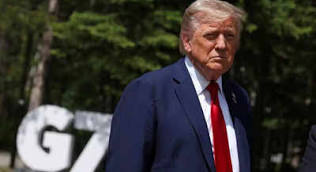
Middle East crisis, On June 17, 2025, amid the intensifying Middle East crisis marked by a fourth and fifth day of missile exchanges between Israel and Iran, U.S. President Donald Trump departed the G7 summit in Canada—specifically, the 51st edition hosted in Kananaskis, Alberta—a day earlier than expected, citing urgent developments in the region.
The initial trigger was a rapid military escalation: Israel launched extensive airstrikes across Iran, targeting military installations and even broadcasting properties like state TV, resulting in civilian and leadership casualties. Iran, in response, unleashed a barrage of missiles and drones targeting Tel Aviv and other areas .
This marks one of the most severe episodes of direct Israel‑Iran hostilities in decades, a flashpoint within the ongoing broader Middle East crisis.
Table of Contents (Middle East crisis)
🇺🇸 Trump’s Sudden Departure
On Monday evening after the G7 leaders’ dinner, Trump’s press secretary, Karoline Leavitt, announced he would be returning to Washington “because of what’s going on in the Middle East” bild.de+2apnews.com+2npr.org+2. He originally intended to stay through Tuesday, but canceled a planned meeting with Ukraine’s President Zelenskyy and Australian PM Albanese for the same reason apnews.com+1news.com.au+1.
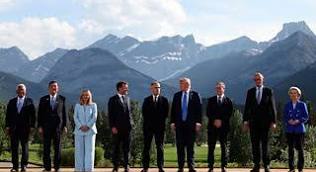
After the family photo and a trade-focused agenda—including a trade pact with the UK sealed with PM Keir Starmer—Trump cut his visit short apnews.com+2politico.eu+2npr.org+2. His abrupt hop back to Washington signaled the Middle East crisis had escalated into a U.S. national security priority.
⚠️ Warning to Tehran: “Excacuate immediately”
Upon his exit, Trump issued a dramatic warning: “Everyone should immediately evacuate Tehran!” apnews.com+1timesofindia.indiatimes.com+1. He chastised Tehran for eschewing U.S. diplomacy within a previously established 60-day window and threatened dire consequences if Iran persisted en.wikipedia.org.
The warning accompanied U.S. actions—such as deploying two aircraft carriers to the region—but explicitly resisted official engagement in Israeli strikes news.com.au+1en.wikipedia.org+1. Trump said, “I don’t want to talk about” U.S. military involvement directly apnews.com.
🏘️ Deepening the Middle East crisis
This moment is pivotal in the broader Middle East crisis:
- Iran‑Israel strikes: Five straight days of mutual aerial attacks, causing hundreds of casualties—around 220+ killed in Iran and dozens in Israel en.wikipedia.org+5npr.org+5theguardian.com+5.
- U.S. presence: Dispatch of U.S. carriers, though Trump emphasized restraint amid troop positioning .
- Global rhetoric: Trump warned Iran to “make a deal” or face “more destructive and deadly military action,” praising Israeli success in targeting Iran’s nuclear infrastructure en.wikipedia.org+1en.wikipedia.org+1.
- Diplomacy vs. deterrence: Trump sought cease‑fire talks and renewed nuclear negotiations tailored to U.S. interests nypost.com+8theguardian.com+8politico.eu+8.
🌍 Responses within the G7 (Middle East crisis)
Despite Trump’s early exit, the remaining G7 leaders issued a strong unified statement, condemning Iran as the “principal source of regional instability and terror” and affirming that “Iran can never have a nuclear weapon”. They also affirmed Israel’s right to self‑defense and called for a broader de‑escalation that includes a cease‑fire in Gaza timesofisrael.com+2politico.eu+2hindustantimes.com+2.
Germany’s Chancellor Friedrich Merz is spearheading a proposed summit statement reinforcing this message theguardian.com+6politico.eu+6apnews.com+6.
European leaders also convened informal talks—Britain’s PM Starmer, France’s Macron, Italy’s Meloni, Germany’s Merz—to discuss the deteriorating Middle East crisis apnews.com.
🇫🇷 France’s read-in on diplomacy
France’s President Macron said Trump had proposed a cease‑fire initiative and invited delegates to meet with Iranian counterparts—an offer he called a “very good thing,” aiming to “kick‑start broader discussions” theguardian.com+2theguardian.com+2nypost.com+2.
Macron emphasized the cease‑fire proposal was “especially to get a ceasefire,” adding that further negotiations would follow only if both countries respond theguardian.com+1theguardian.com+1.
🌐 Geopolitical stakes in the Middle East crisis
This latest flare‑up is shaped by several dynamics:
- Israeli offensive: IDF strikes struck Iran’s nuclear facilities and military command centers starting June 13, killing senior Iranian figures and prompting counter‑strikes en.wikipedia.org.
- U.S. leverage: Trump’s “maximum pressure” sanctions against Iran since Feb 2025 aimed to compel nuclear diplomacy, though critics warn it worsens regional tensions en.wikipedia.org.
- Nuclear brinkmanship: With Israel’s bombardment tied to concerns over Iran’s nuclear ambitions, Trump and G7 leaders underscored that Iran must never obtain nuclear weapons .
- Regional dominoes: The strikes and troop positioning are shifting energy markets, prompting G7 pledges to safeguard supply stability .
📌 Implications (Middle East crisis)
- U.S. posture: Trump balances deterrence (pressure on Iran) with caution, as he avoids formal alignment in an Israel‑Iran war.
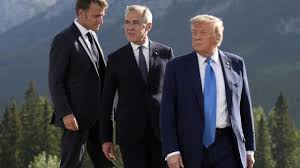
- Diplomatic discord: His refusal to sign an early de‑escalation draft created a rift at Kananaskis—though he later assented under peer pressure apnews.com.
- G7 unity: The final communique asserts forcefully that Iran must not become nuclear-capable, while advocating Israel’s right to self-defense and crisis de‑escalation .
- Cease‑fire pivot: Macron’s cease‑fire offer could open diplomatic engagement—though amid ongoing attacks, a breakthrough is challenging .
- Global economic ripple: Rising Middle East tensions threaten oil supply and markets—hence G7 readiness to coordinate energy measures .
🧭 What to watch
- Response in Tehran: Iran’s leadership may escalate or de‑escalate based on U.S. and Israeli moves.
- Diplomatic overtures: Whether cease‑fire talks proceed, possibly mediated by France, or get undermined by renewed airstrikes.
- U.S. domestic angle: Congress, including Democrats, may push for limits on executive military action amid calls to curb war powers theguardian.com.
- Kerry re‑emergence: Potential behind‑the‑scenes U.S. diplomacy to balance Trump’s posture.
- Regional stability: Egyptian, Saudi, or Gulf states’ reactions—and Iran‑backed militia responses—could shape broader escalation.
🔍 Summary (Middle East crisis)
President Trump’s early exit from the G7 summit underscores the gravity of the current Middle East crisis. The combination of Israeli airstrikes on Iran’s nuclear infrastructure, Iran’s retaliatory missile suite, and Trump’s unprecedented edict to “evacuate Tehran” paints a picture of a region on the brink.
Within the G7, leaders rallied around a statement affirming Israel’s right to defend itself, opposing any Iranian nuclear path, and calling for wider de‑escalation. But the summit also exposed fissures—especially after Trump resisted initial de‑escalation language, only to align after peer intervention.
France’s near‑midnight cease‑fire proposal, supported by Trump, signals a potential turn toward diplomacy, but its success is uncertain. Meanwhile, global markets and Congress in Washington will track this flare‑up closely, as the escalating Middle East crisis could spill into global instability.
In short: the Middle East crisis has forced Trump to abandon G7 proceedings, issue stark threats to Tehran, and shift U.S. attention back to Washington. The G7 remains united against Iranian nuclear ambitions and in defense of Israel, while diplomatic offers hang in the balance amid ongoing military exchanges.